Autumn on the Kumano Kodo: From Takijiri to Chikatsuyu
In late October, I walked the Kumano Kodo Nakahechi Route from Takijiri-oji to Chikatsuyu.
Course Overview: Approx. 13.3 km | Walking Time: 5–7 hours | Difficulty: Moderate (steep ascent at the beginning)
In recent years, autumn has been arriving later, and the leaves are only just beginning to change color around this time of year.
We were blessed with beautiful weather that day, making it perfect for hiking. Feeling the crisp autumn air, I set off with a sense of excitement.
The route from Takijiri to Chikatsuyu is approximately 13.3 km long. It is a fascinating trail where you can experience the rich history and natural beauty of the Kumano Kodo.
In this article, I’ll share my experiences along the trail, highlight some of the sights, and introduce recommended spots for taking breaks and enjoying lunch.
Why Do People Start Walking the Kumano Kodo from Takijiri?
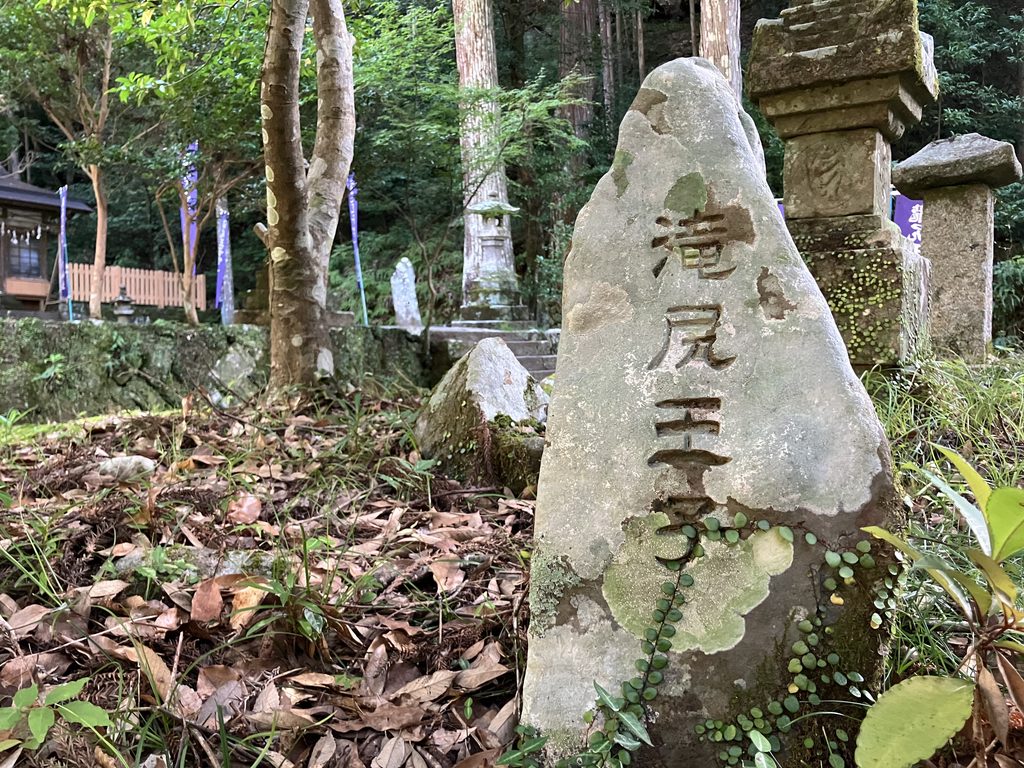
Takijiri-oji is the starting point for many hikers walking the Kumano Kodo Nakahechi Route.
So, why do so many people start their hike from Takijiri? One of the reasons lies in the history of the Kumano pilgrimage.
From the late Heian period to the Kamakura period, many retired emperors and aristocrats, including Emperor Go-Shirakawa and Emperor Go-Toba, made pilgrimages from Kyoto to Kumano.
Takijiri was considered the gateway to the sacred realm of Kumano. It is said that pilgrims in those days regarded the land beyond this point as a special, sacred place and continued their journey on foot along the steep mountain trails.
Even today, many hikers begin their journey from Takijiri, reflecting on this rich history as they walk.
There are two main ways to walk the route from Takijiri to Chikatsuyu.
- 1One-Day Hiking Course Walk approximately 13.3 km from Takijiri-oji to Chikatsuyu.
- 2Two-Day Hiking Course On Day 1, walk approximately 4 km from Takijiri-oji to Takahara. On Day 2, walk approximately 9.3 km from Takahara to Chikatsuyu.
You can choose the option that best suits your travel itinerary and fitness level.
This time, I walked the entire route from Takijiri to Chikatsuyu in one day.
A Steep Climb Right from the Start at Takijiri-oji!
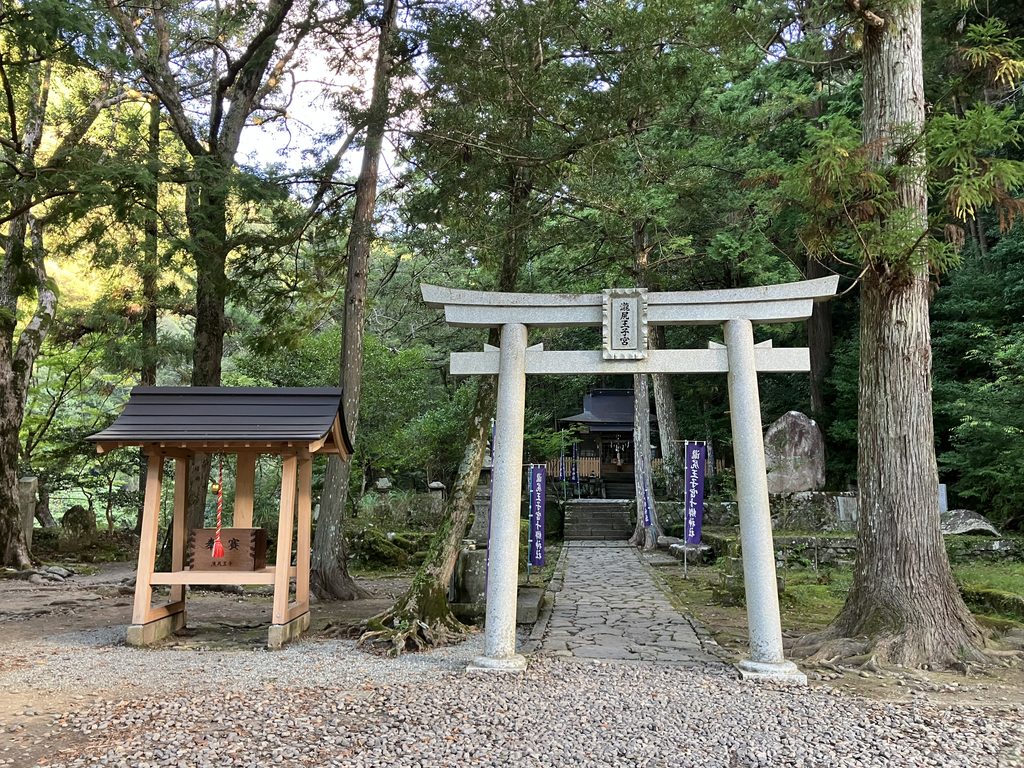
First, I pay my respects at Takijiri-oji Shrine and pray for a safe journey.
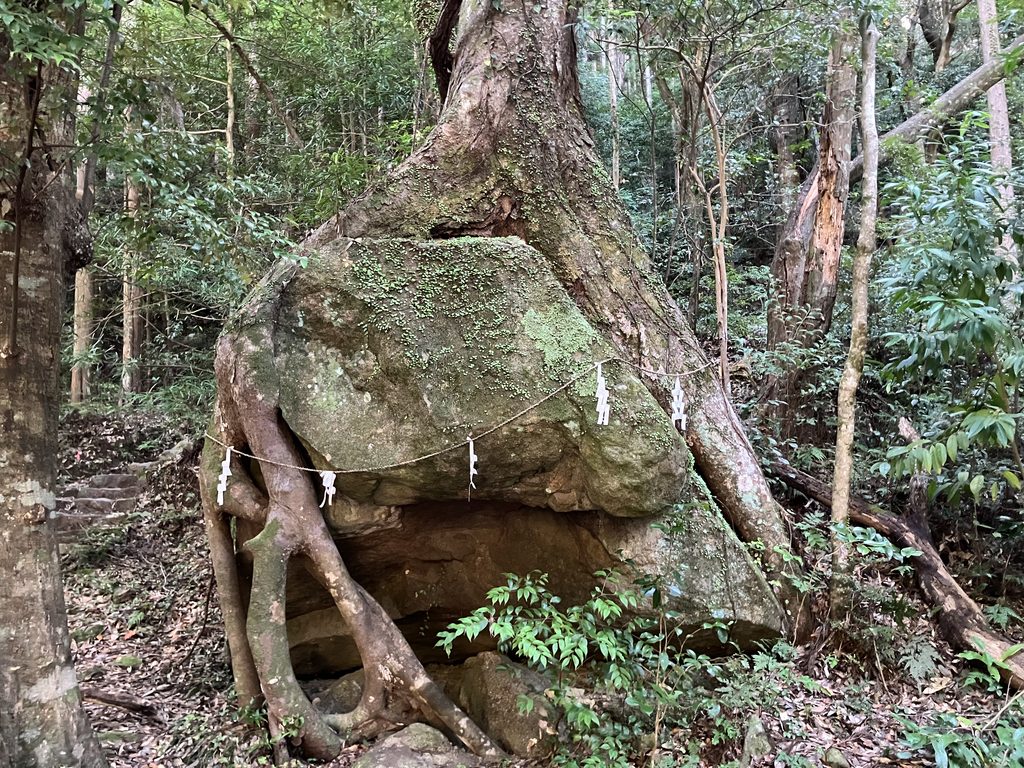
The first thing that greeted me as I entered the forest was a towering tree with its roots stretching over a massive rock. Its powerful presence, as if embracing the rock, gave me a sense of the forest’s vitality and long history.
And shortly after setting off, the most challenging part of the hike awaits.
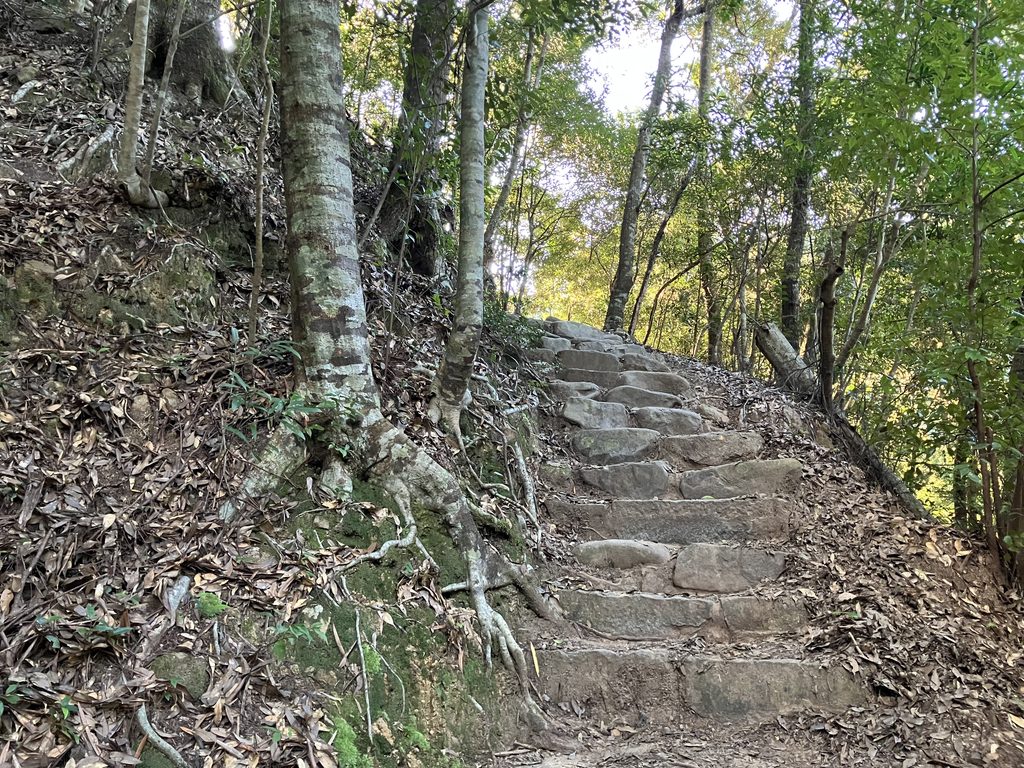
It’s the steep ascent leading up to Tsurugi-no-Yama.
The trail climbs approximately 300 meters in elevation over a distance of just 1.1 km. I would say this is one of the steepest uphill sections of the Nakahechi Route.
Having just started the hike, my body hasn’t had time to warm up yet. This steep climb takes a lot of energy right from the beginning.
Take your time on this section, and don’t push yourself too hard!
The Mysterious Legends of Tainai-kuguri and Chichiiwa Rock
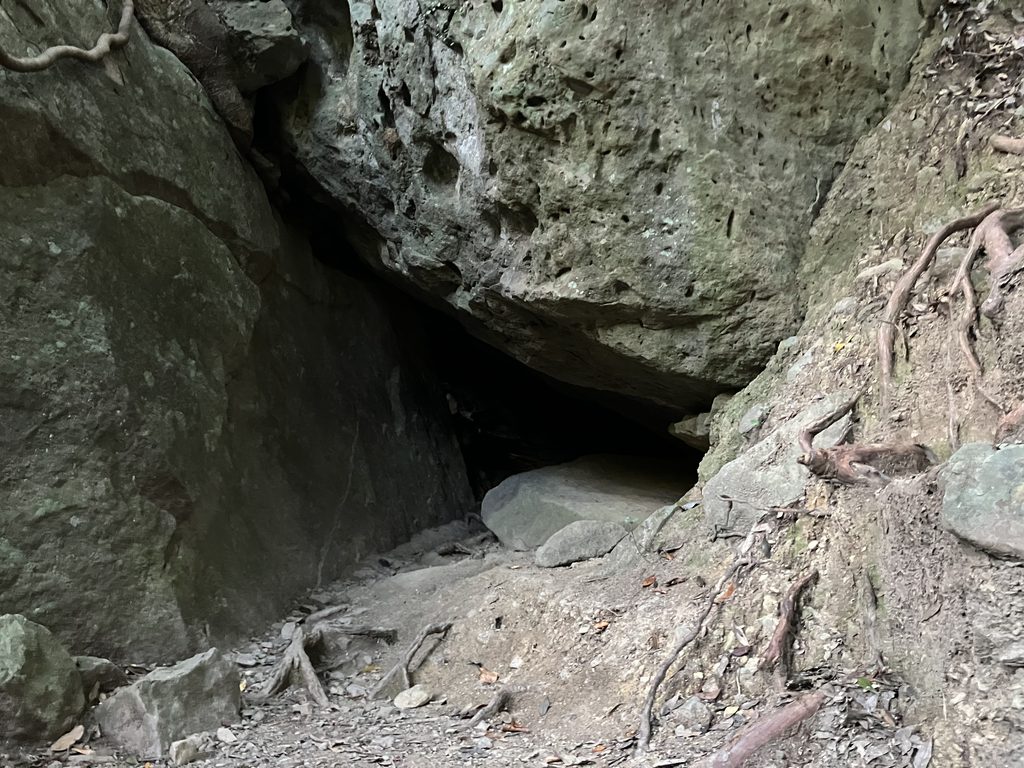
As you climb the steep trail, you’ll come across a narrow opening between rocks known as “Tainai-kuguri.”
According to legend, women who pass through this narrow opening are blessed with a safe childbirth. Although I’m a man, I thought I might receive some other kind of blessing, so I decided to give it a try.
The passage itself is short, but the exit is quite narrow, so it might be a bit challenging for larger people. I somehow managed to squeeze through!
As you continue along the trail, you’ll come across a rock known as “Chichiiwa.”
A mysterious legend associated with Fujiwara no Hidehira, a military commander from the late Heian period, has been passed down at this site.
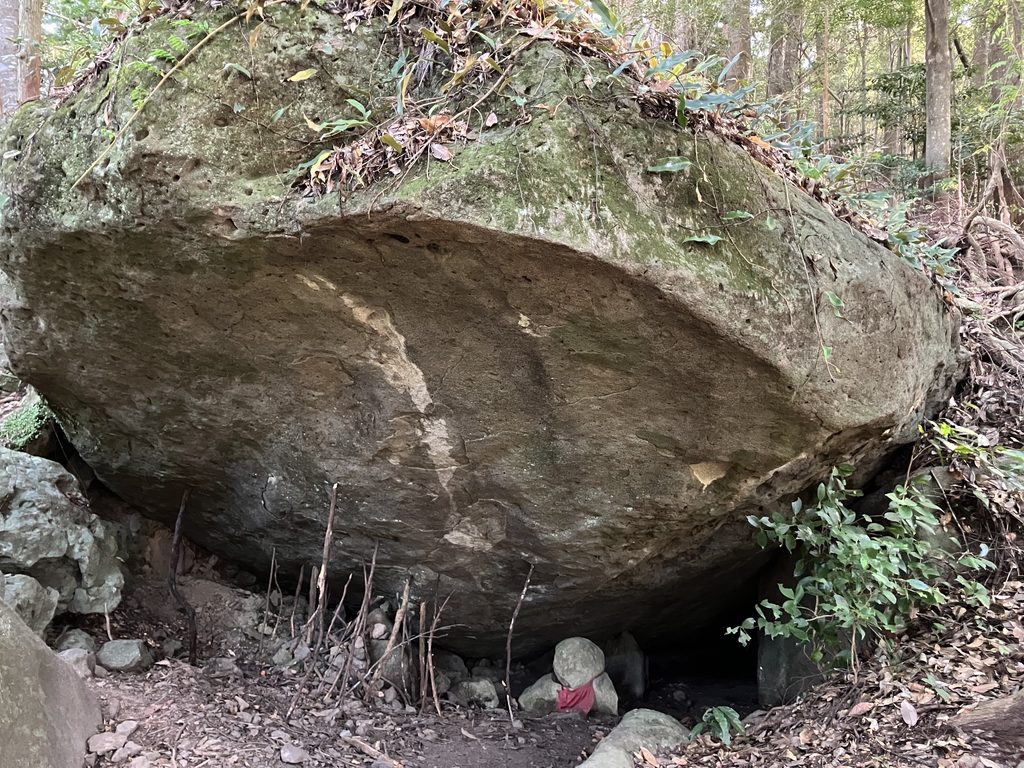
Fujiwara no Hidehira had long been unable to have children, so he prayed to the Kumano deities to bless him with a child. His prayers were answered, and his wife became pregnant.
To express their gratitude, the couple set out on a pilgrimage to Kumano. However, when they arrived at Takijiri-oji, his wife suddenly went into labor and gave birth to a baby boy in a rocky cave in the mountains.
According to the legend, the Kumano deities then instructed them to leave the baby there and continue their pilgrimage. Following this divine message, the couple left their newborn son in the cave and made their way to Kumano Hongu.
When they returned after completing their pilgrimage, an astonishing sight awaited them.
To their amazement, their baby had been protected by a wolf and had survived by drinking milk that dripped from the rock. The baby was alive and well!
According to the legend, this is how the rocky cave came to be known as “Chichiiwa,” or “Milk Rock.”
Still, I have to say, telling someone to “leave your newborn baby behind and continue your pilgrimage” was quite an unreasonable request from the Kumano deities!
But then again, I have to wonder about Fujiwara no Hidehira, too. Just because he was told to do so, did he really have to leave his baby behind...? (^^;)
Many mysterious legends like this have been passed down along the Kumano Kodo.
Imagining what people in the past believed in and what thoughts and feelings they carried as they walked these trails is one of the many pleasures of exploring the Kumano Kodo.
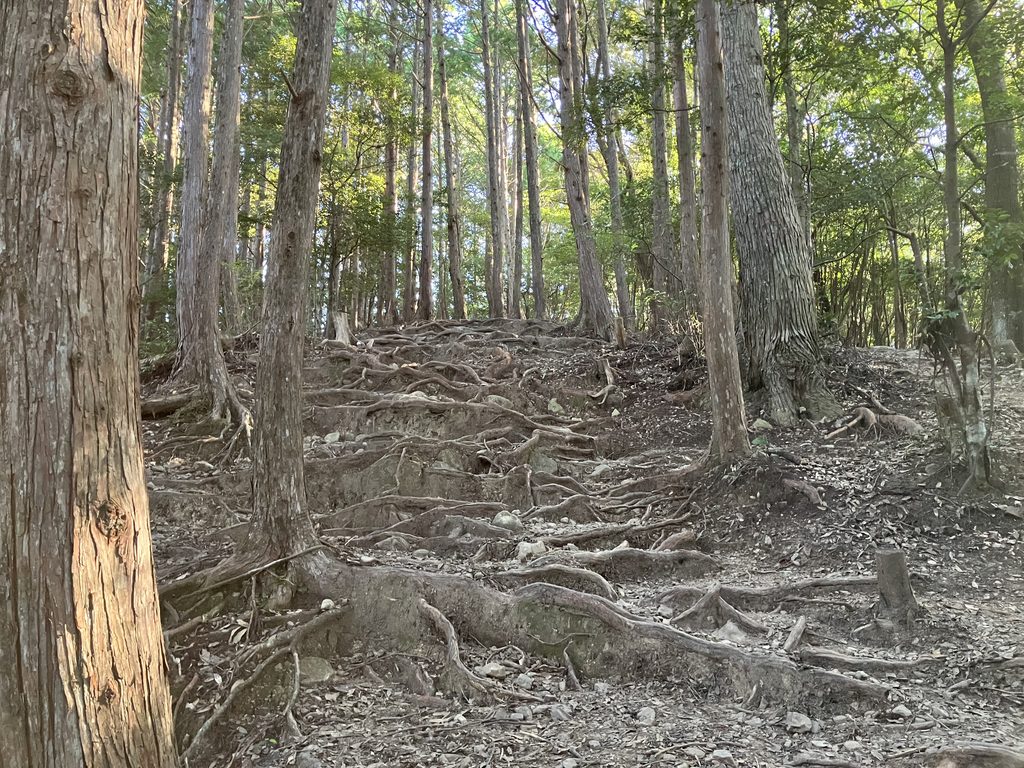
Along this section of the trail, tree roots spread across the ground, forming what look like natural steps. I continue carefully, watching my footing to avoid tripping.
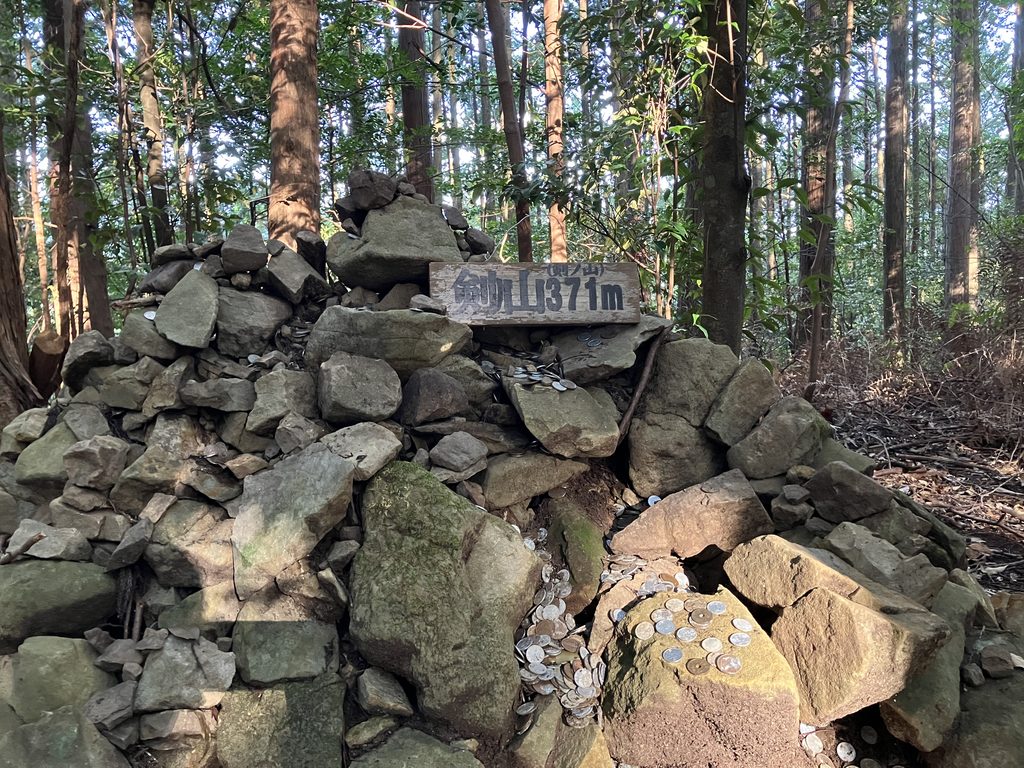
Eventually, I came across a sign marking the summit of Tsurugi-no-Yama.
I made it to the summit!
After the steep climb, the trail becomes relatively gentle for a while. I could finally catch my breath.
The Forest Trail to Takahara and the Soothing Mountain Views
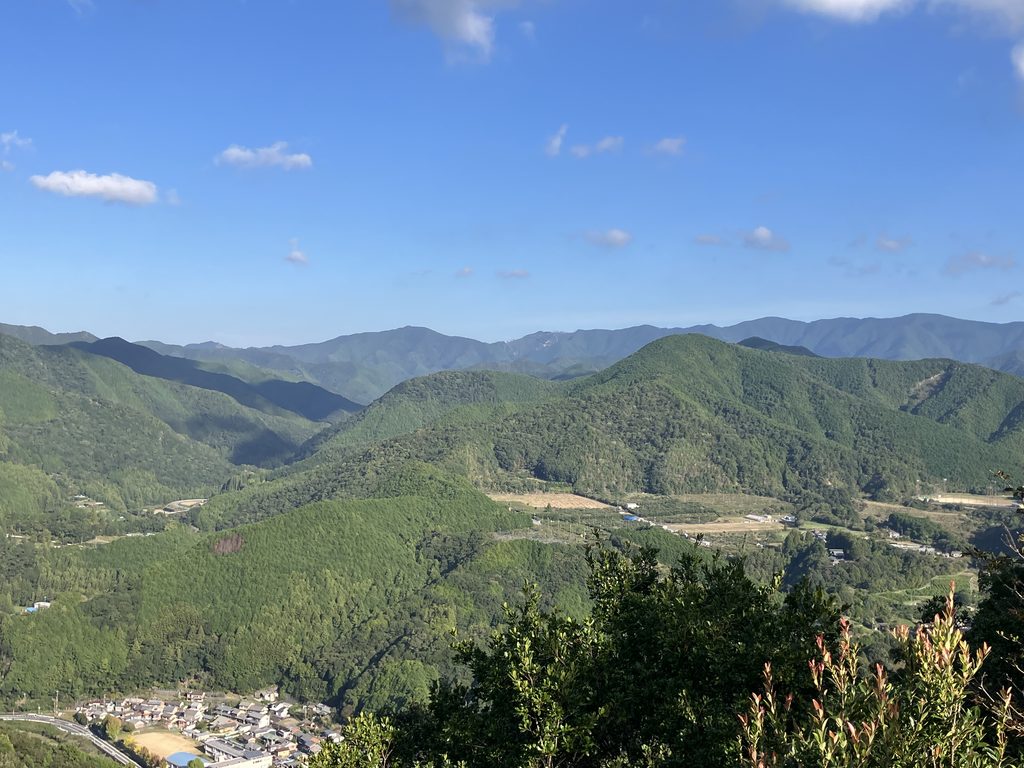
Along the way, there are viewpoints where you can admire the mountain ranges of the Kii Mountains. The sight of mountains stretching into the distance, one ridge after another, is a welcome relief after the tiring climb.
I was beginning to find my rhythm as I walked.
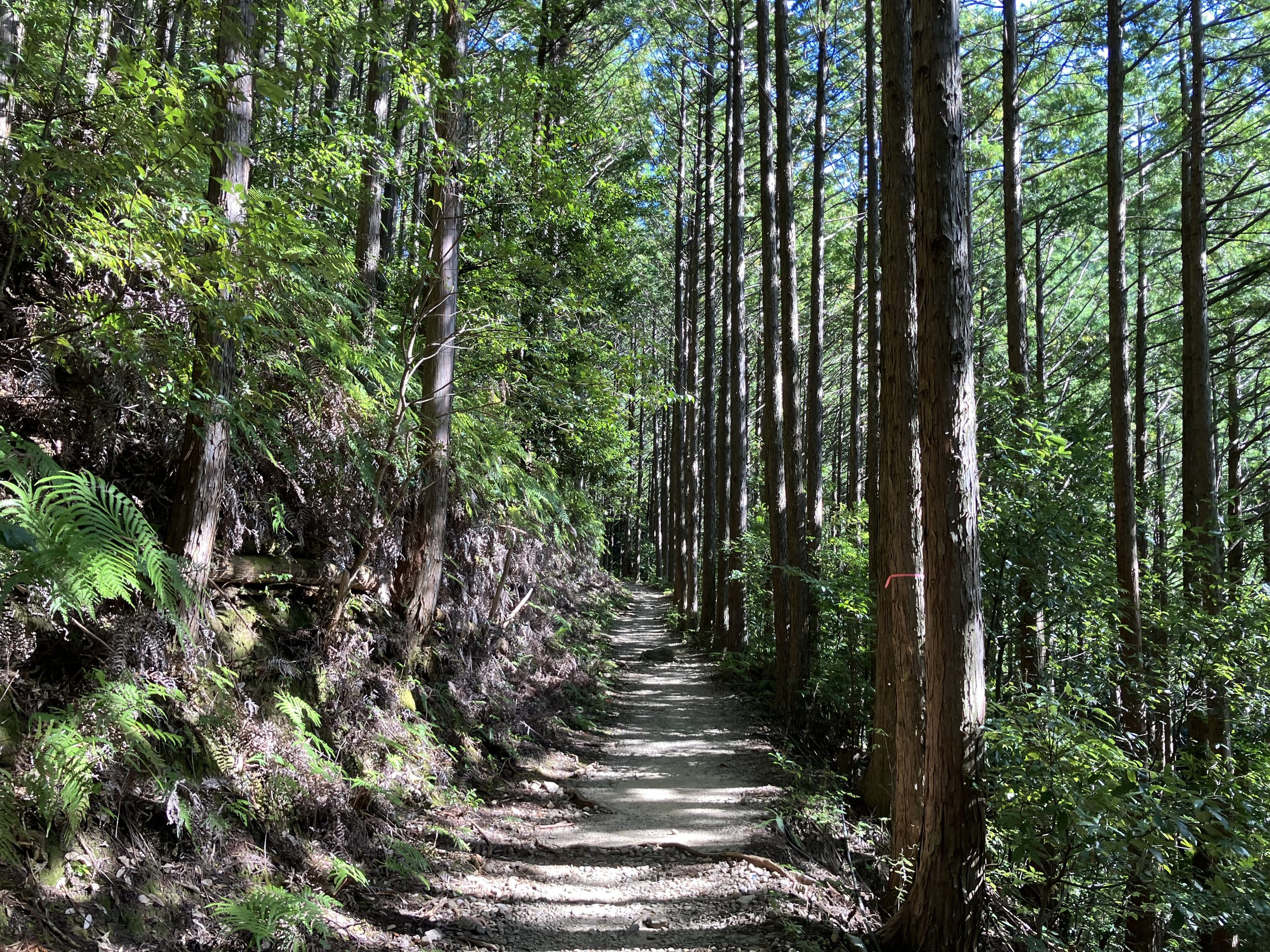
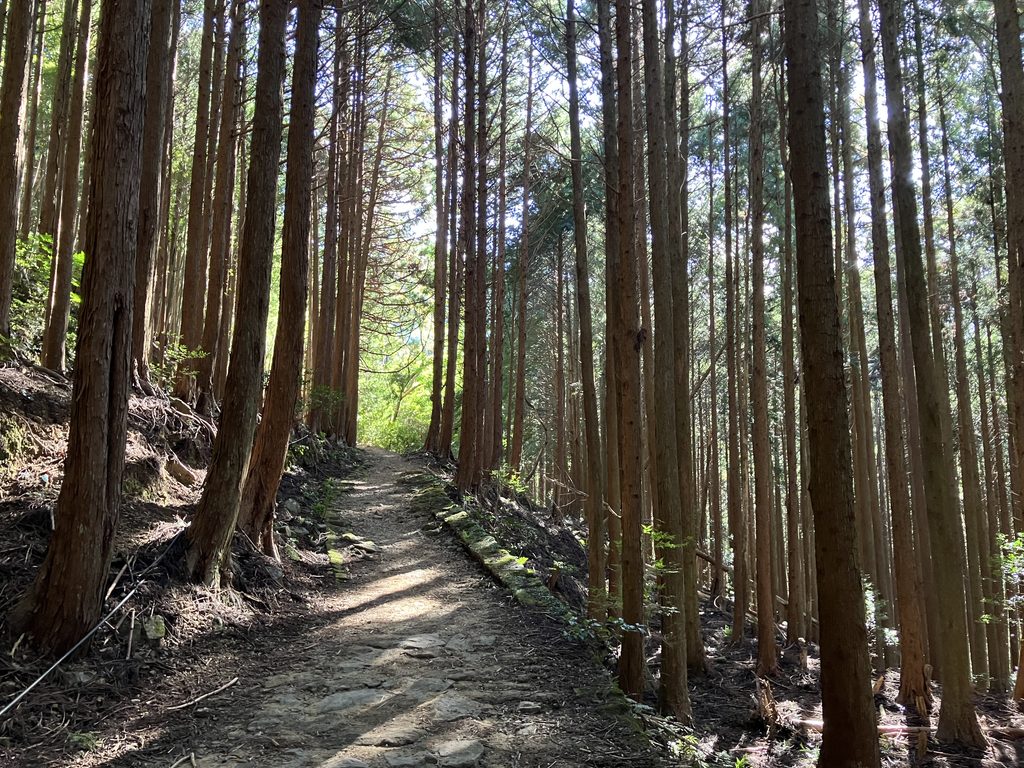
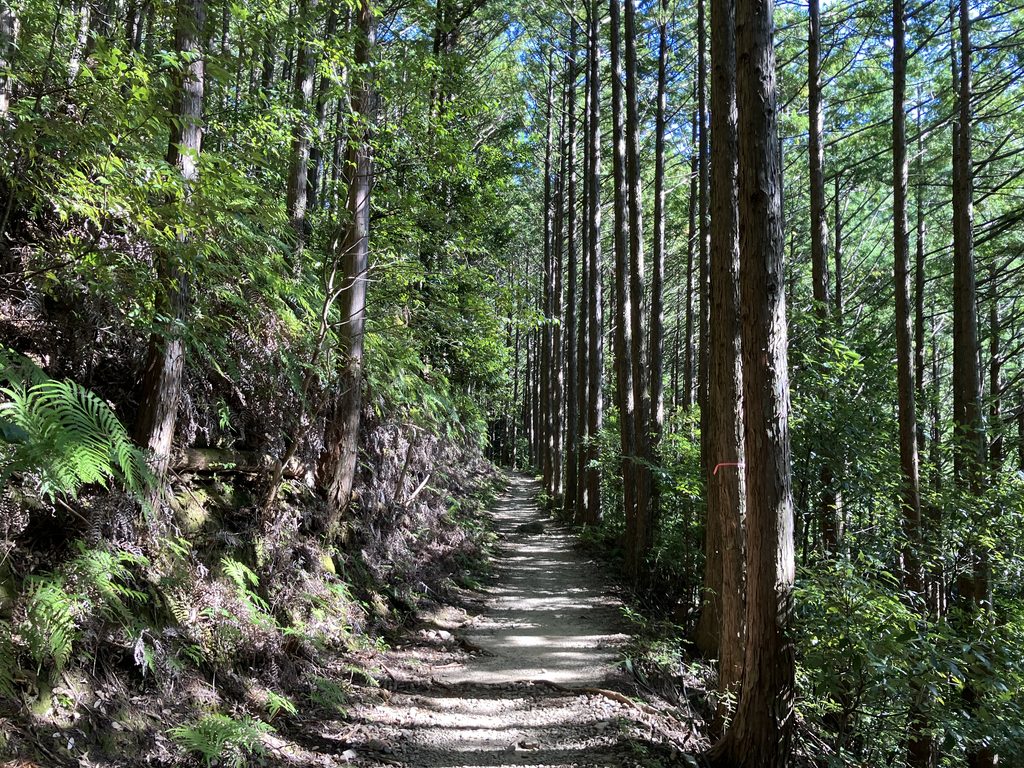
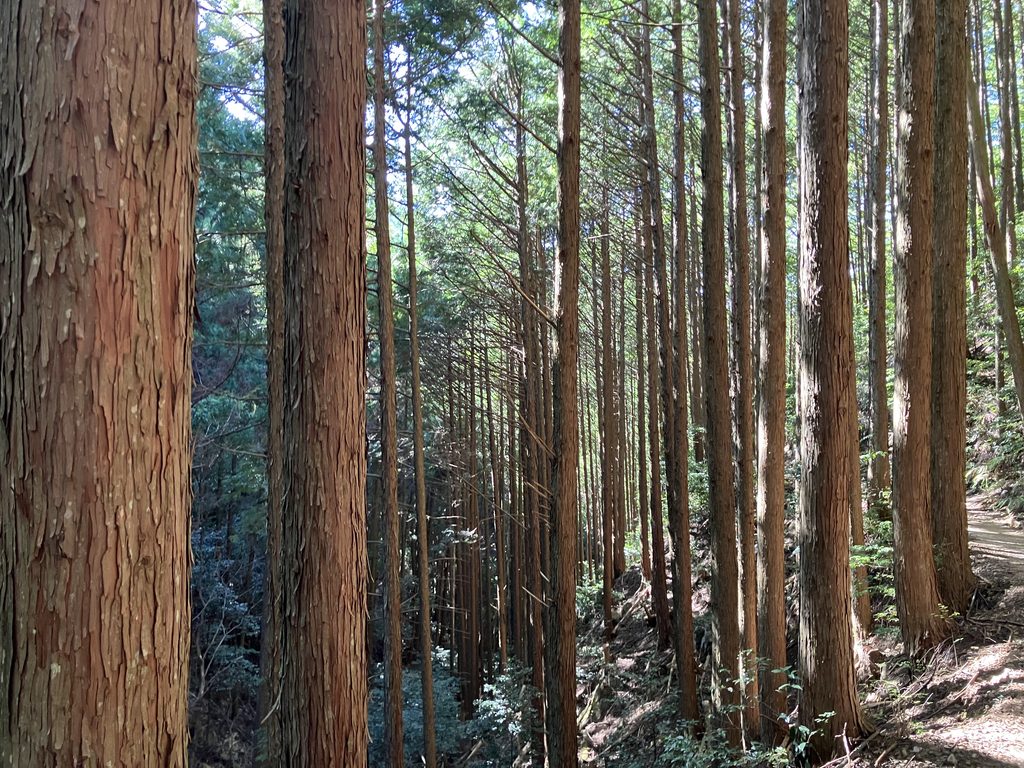
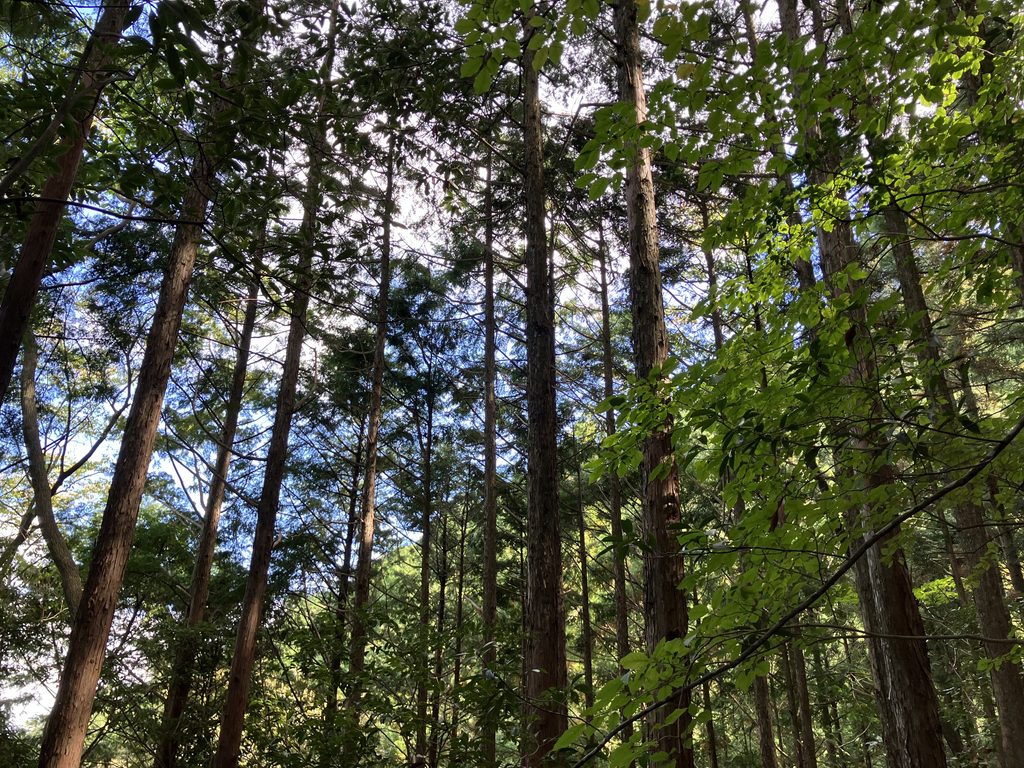
Walking through the forest of towering cedar and cypress trees, I felt as though the greenery overhead formed a natural roof. It was a wonderful feeling to walk along the trail with sunlight filtering through the trees.
Furniture Crafted from Forest Trees: Iwami Woodworks
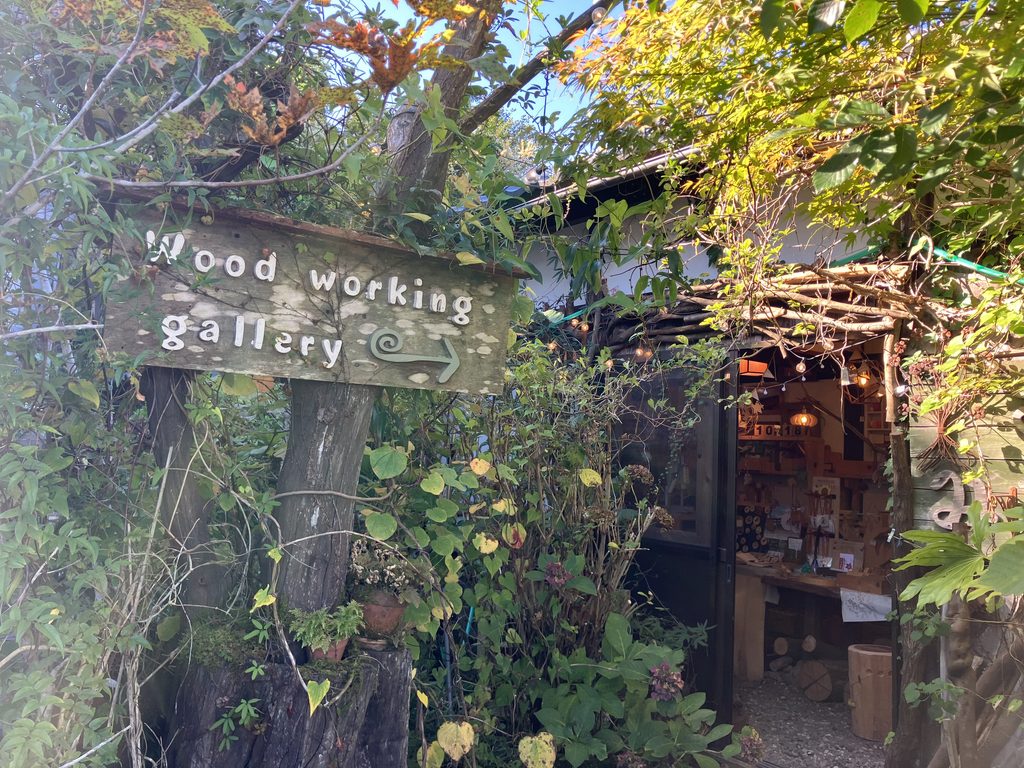
Just before reaching Takahara Kumano Shrine, you’ll come across a woodworking workshop called “Iwami Woodworks.”
There is a small gallery here called “Wood Working Gallery,” where unique, handcrafted wooden items are displayed and sold.
In fact, several pieces of furniture at our guesthouse, including our tables, were custom-made here.
“I want to welcome our guests with one-of-a-kind furniture made from trees grown in this very forest.”
This is where they brought our vision to life.
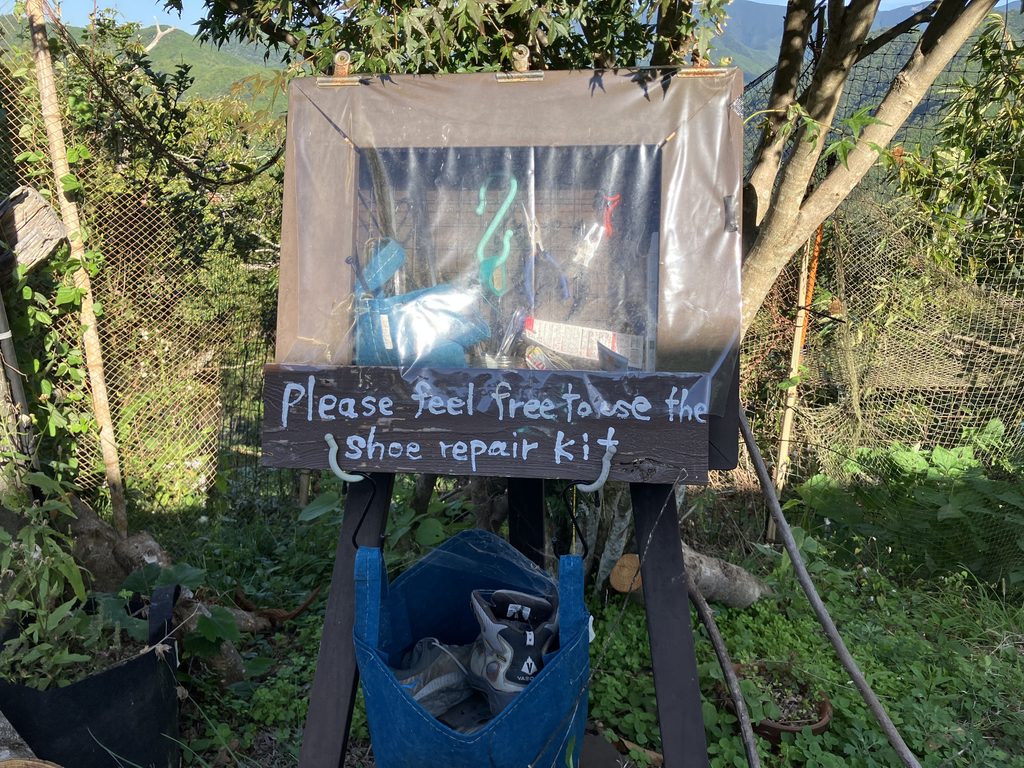
In front of the shop, there are also shoe repair tools that hikers are welcome to use free of charge. It’s a small but thoughtful gesture of kindness toward those walking the trail. Little acts of kindness like this always warm my heart.
Be sure to stop by if you have the chance!

Takahara Kumano Shrine | A Shrine Building with Approximately 500 Years of History
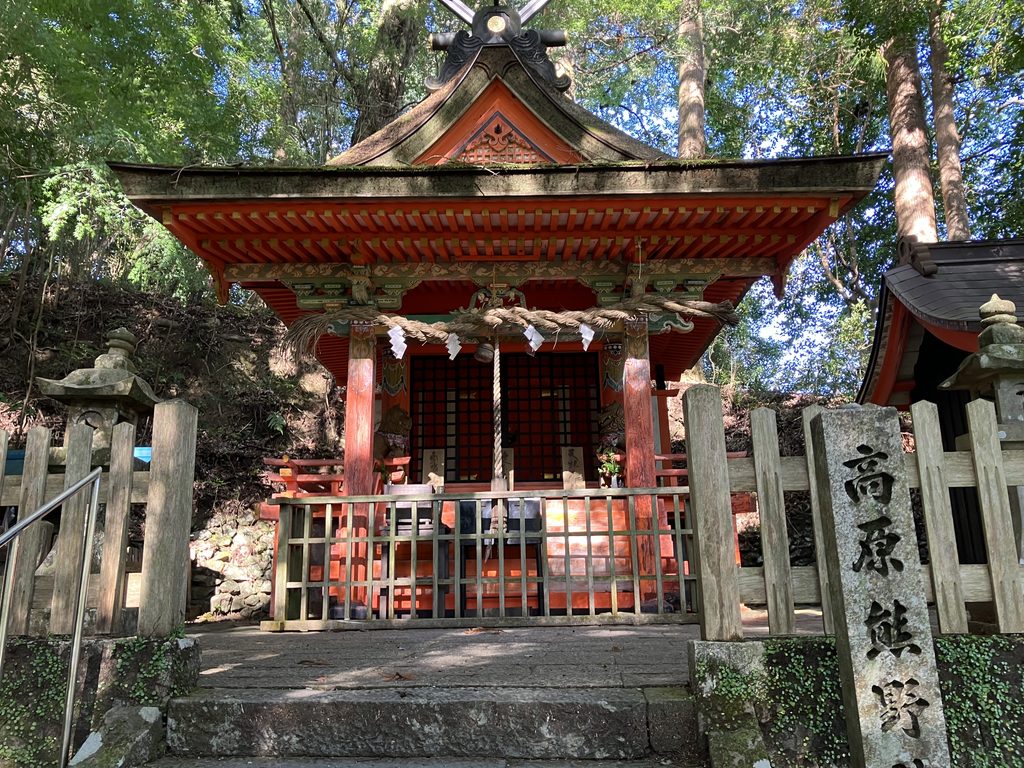
And then, I arrived at Takahara Kumano Shrine.
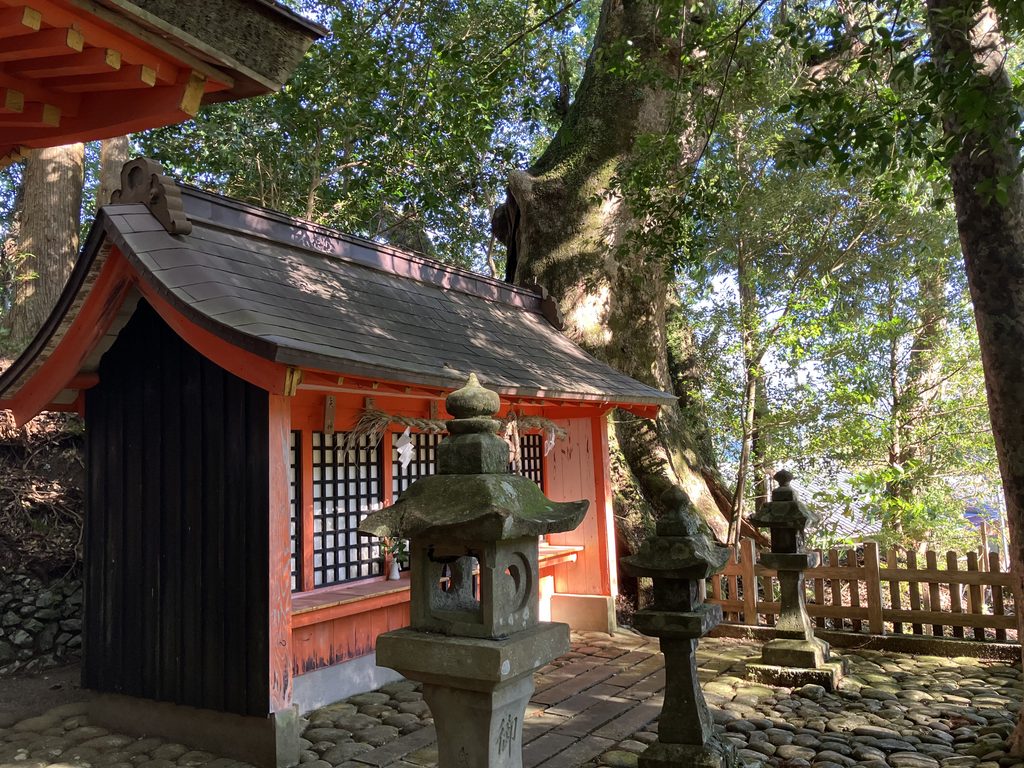
The main shrine building of Takahara Kumano Shrine is believed to have been built during the Muromachi period and is known as the oldest surviving shrine building along the Kumano pilgrimage routes.
Although the shrine building is modest in size, its beautiful cypress-bark roof and vermilion details reflect its long history.
Beside the shrine building stands a magnificent camphor tree said to be around 1,000 years old. This ancient giant has watched over the land and the lives of its people for centuries. Its majestic presence is truly awe-inspiring.
Takahara Kiri-no-Sato Rest Area | Spectacular Panoramic Views of the Kumano Mountains
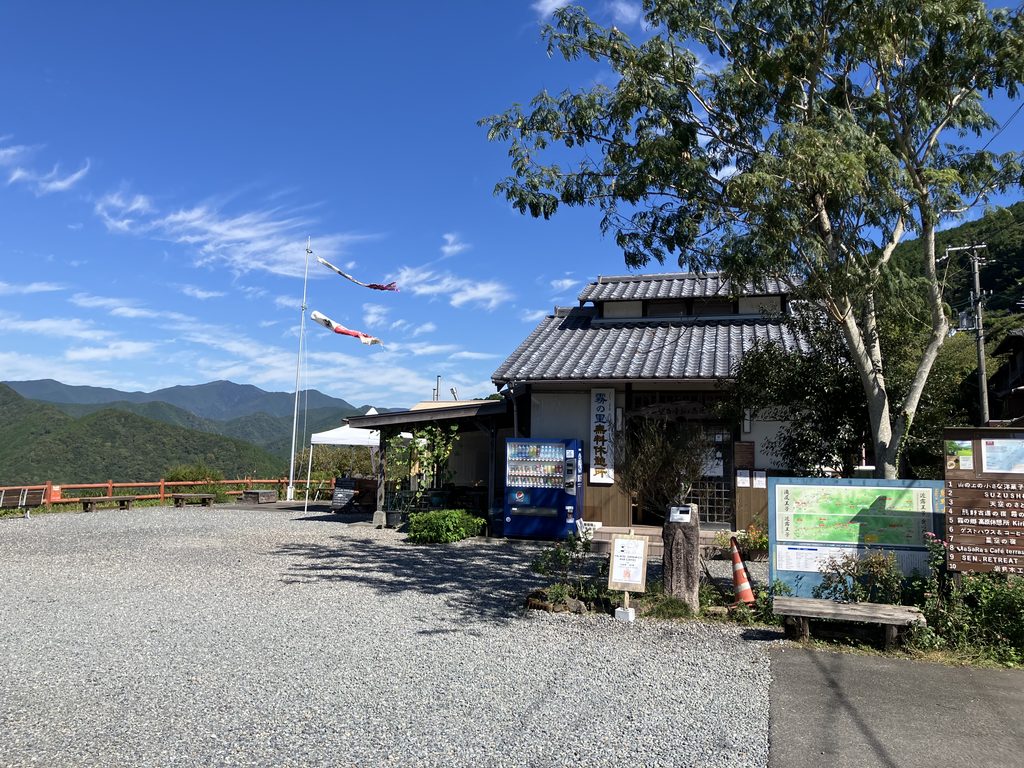
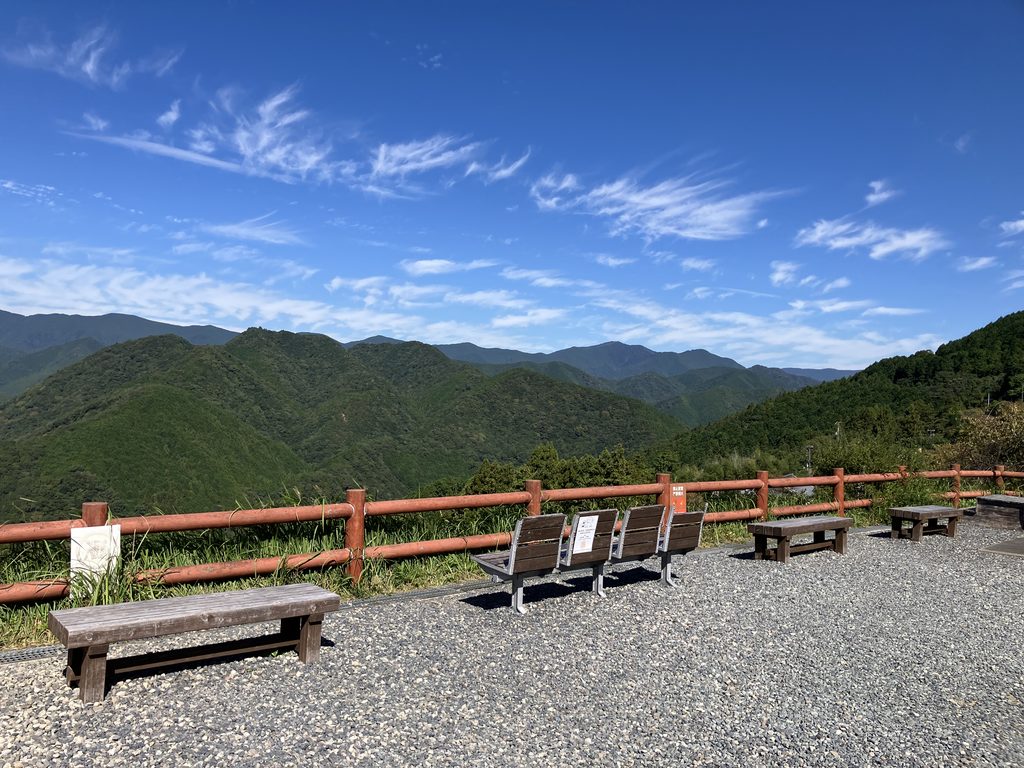
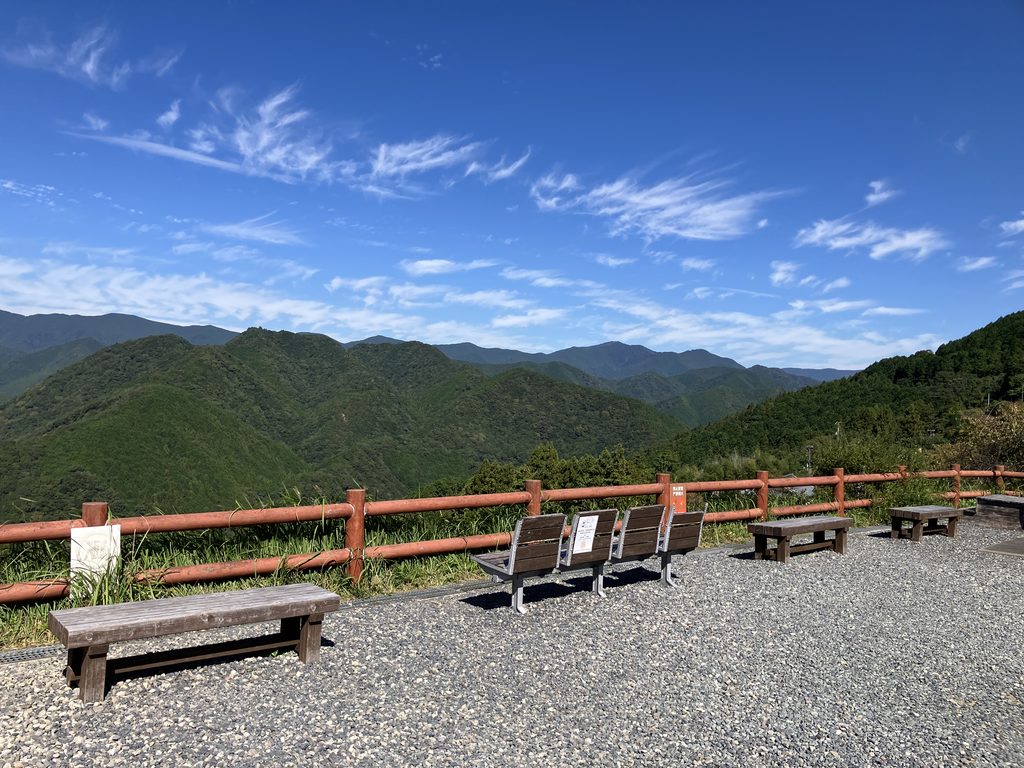
A short walk from Takahara Kumano Shrine brings you to Takahara Kiri-no-Sato Rest Area, one of the most scenic viewpoints along this route.
From here, you can enjoy panoramic views of the Kumano mountains stretching into the distance, with peaceful villages nestled among the hills. On a clear day, you can even see the distant Hatenashi Mountain Range.
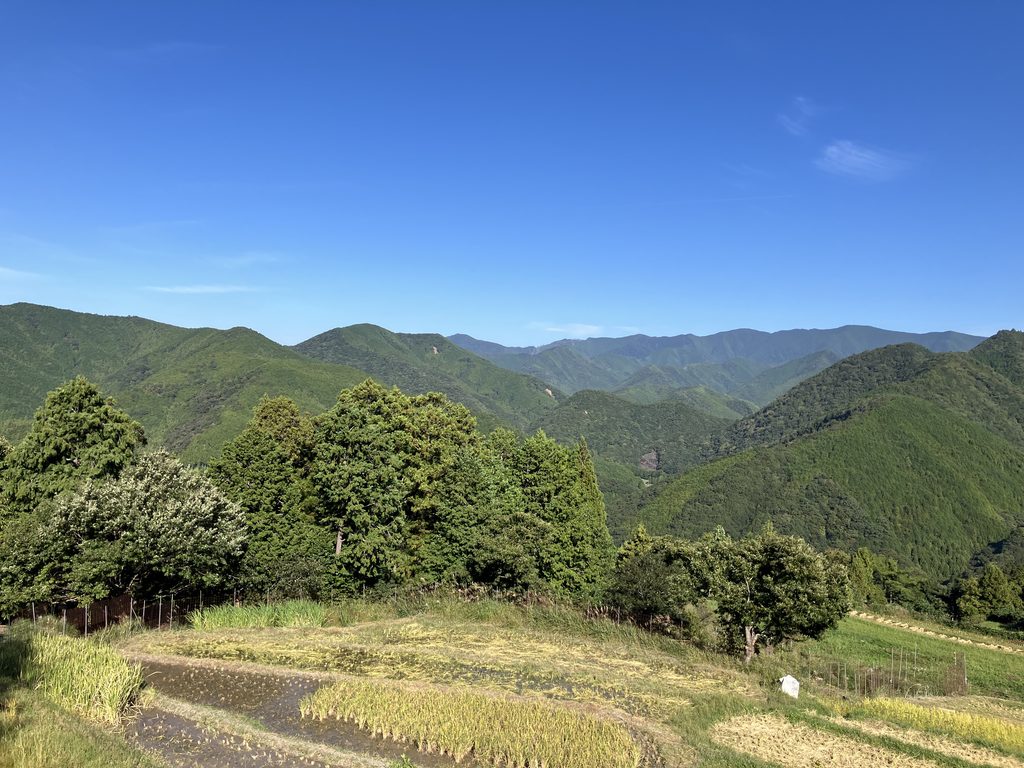
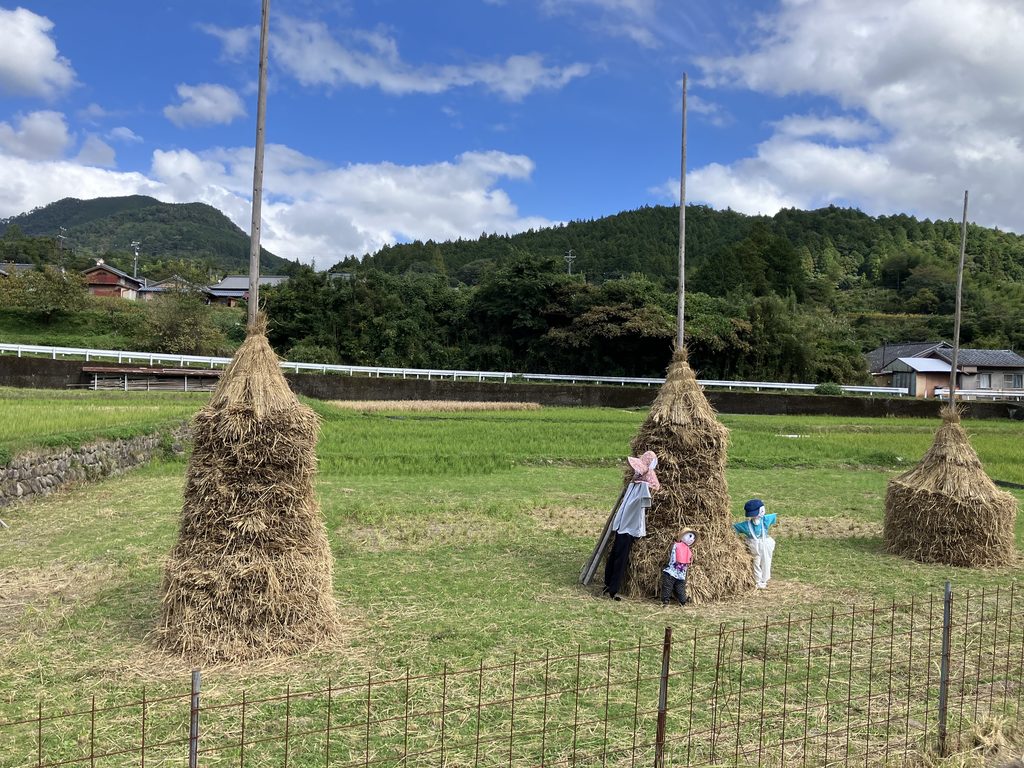
The rice harvest had just finished, and I could see hazakake, a traditional method of hanging harvested rice to dry. It was a beautiful rural scene that captured the charm of autumn in Japan.
Hot coffee was also available at the rest area. Enjoying a cup of my favorite coffee while taking in this beautiful view.
That sounds so nice...
This area is also known as “Kiri-no-Sato,” or “Village of Mist.” When the weather conditions are right, mist fills the valley below, creating a magical sea of clouds. The magnificent mountain views on clear days are wonderful, but the mist-shrouded scenery has its own special charm that is uniquely Kumano.
From Takahara to Chikatsuyu | Reflections While Walking Through the Forest
After taking a short break, I set off again.
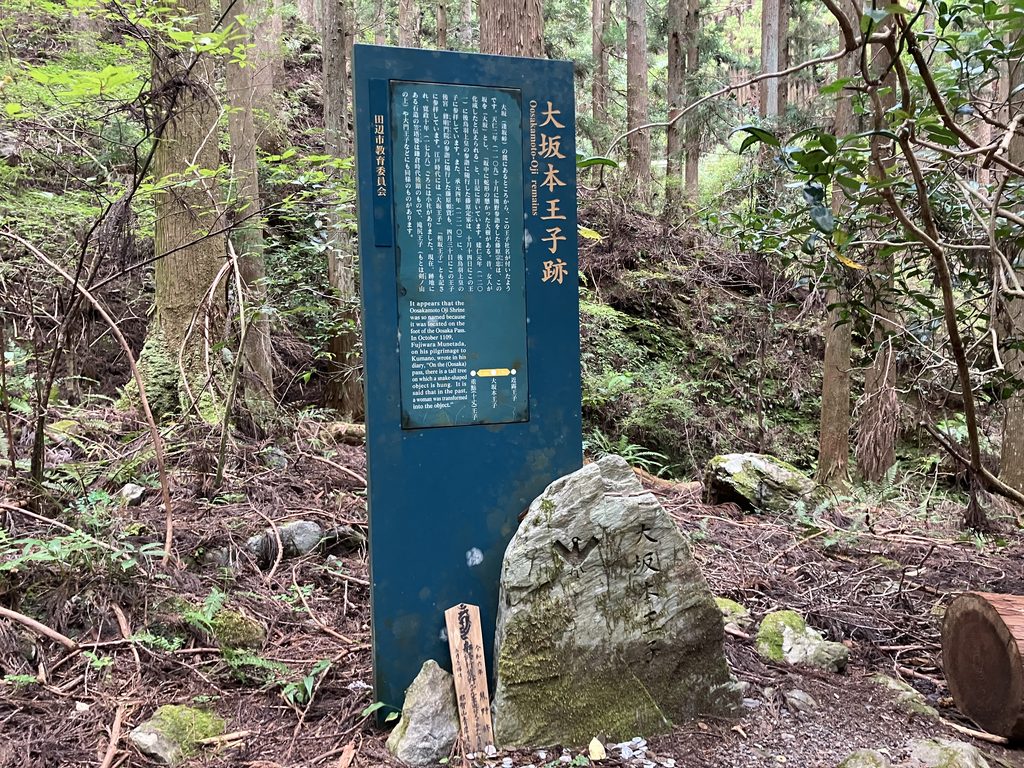
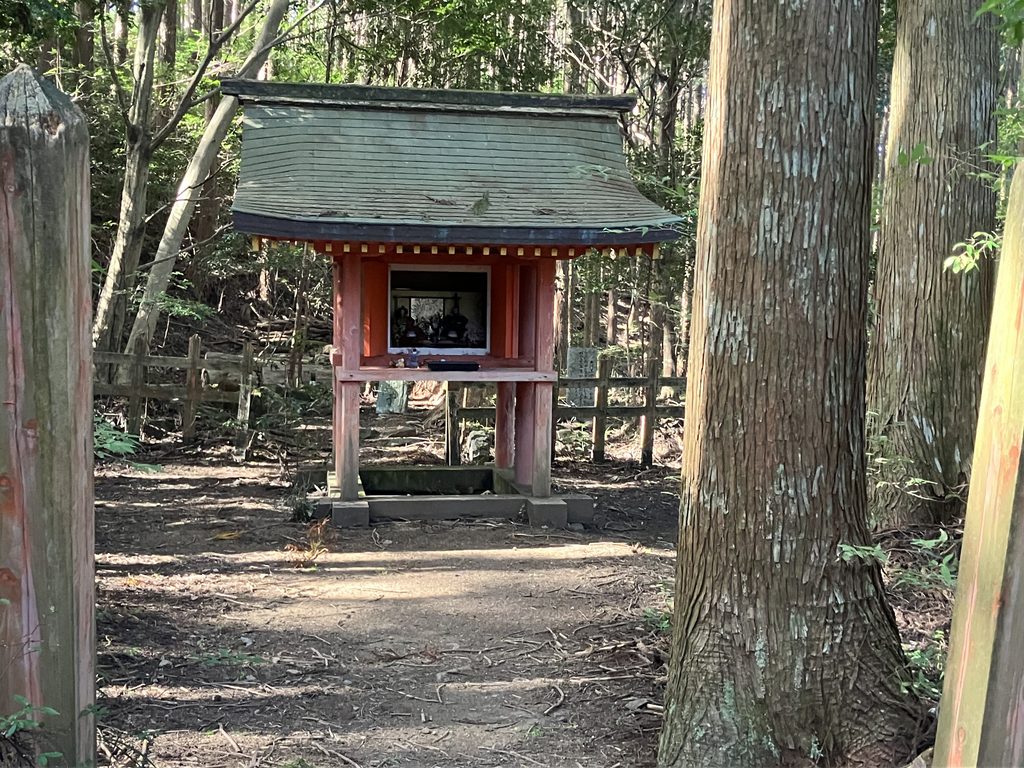
From here, I head toward Chikatsuyu, passing several historic Oji shrine sites along the way, including Daimon-oji, Jujo-oji, and Osakamoto-oji.
Most of this section follows a trail through the forest. Unlike Takahara, there are few places with wide-open views, and I continue walking through the dense forest of towering cedar and cypress trees.
I wonder how many times I’ve walked this trail by now.
To be honest, when I first started walking this trail, I didn’t find this section particularly interesting. I was already tired from the earlier climb, and with little change in the scenery, I felt like I was just walking silently through the forest.
“It feels a bit monotonous and boring...” That’s how I used to feel.
However, after walking this trail many times, I’ve come to feel that this section is actually one of the parts that best captures the true essence of the Kumano Kodo.
Walking Through the Forest May Be a Form of Meditation
This section has relatively gentle ups and downs, allowing you to walk quietly at your own pace.
As I walk along, I gradually find myself thinking about all sorts of things—everyday life, work, and what lies ahead. I'm not consciously trying to think about anything in particular. The thoughts just come naturally as I walk.
Perhaps it’s something similar to meditation.
In the past, I used to feel a little disappointed in myself for thinking this way.
“I came hiking to get away from everyday life, yet here I am, still thinking about the same things. I just can’t seem to switch off...”
But now, I’ve come to realize that it’s okay.
Even if my mind wanders to everyday concerns, I’m still here, walking through this forest.
The sound of the wind, the songs of birds, and the sunlight filtering through the trees gently remind me of that.
Even when I’m lost in thought, my attention naturally returns to the nature around me before I know it. As this happens again and again, I feel my mind gradually becoming calmer and more peaceful.
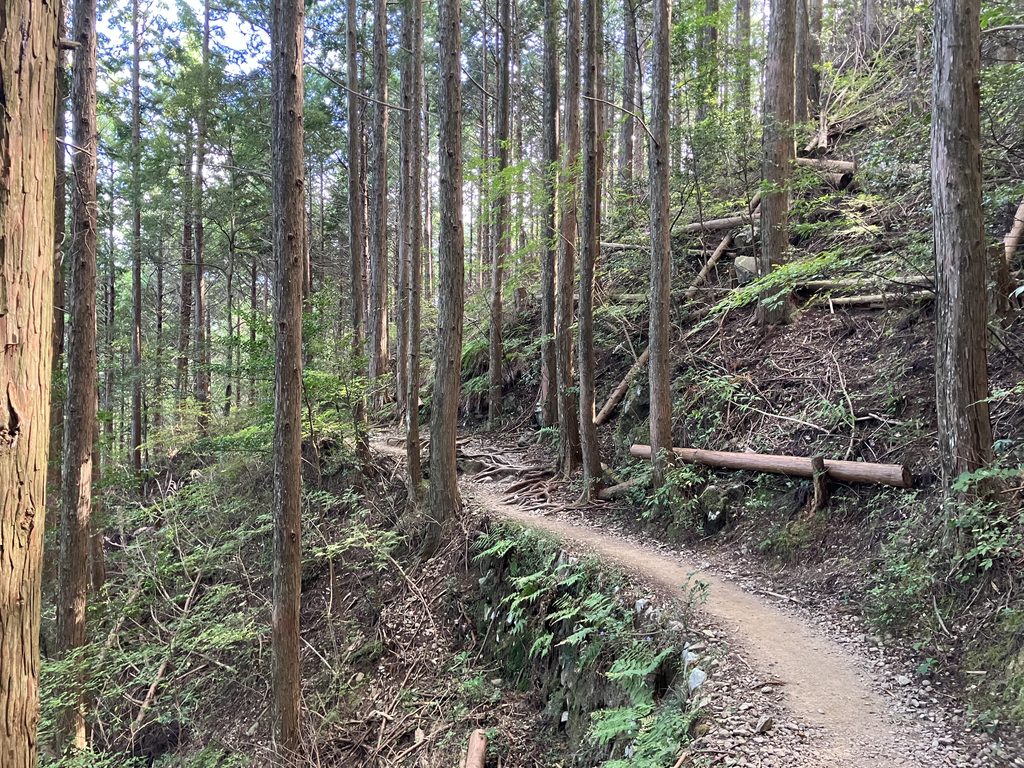
Pilgrims Walked These Mountains 1,000 Years Ago, Too
As I look at the historic sites along the trail and the trees that have stood here for centuries, a thought sometimes crosses my mind.
“What were the people who walked these mountains about 1,000 years ago thinking as they made their journey?”
Their way of life and values must have been very different from ours today. Yet they were human beings, just like us. Perhaps they, too, walked through these mountains carrying their own joys, worries, hopes, and wishes.
And as I walk through forests like this, I sometimes feel that we humans are simply a small part of nature.
When I think about the long history of the Earth, a single human lifetime seems like just a fleeting moment.
Surrounded by the vastness and timeless beauty of nature, even the worries of everyday life begin to feel a little smaller.
Thinking about it this way somehow makes me feel more at ease.
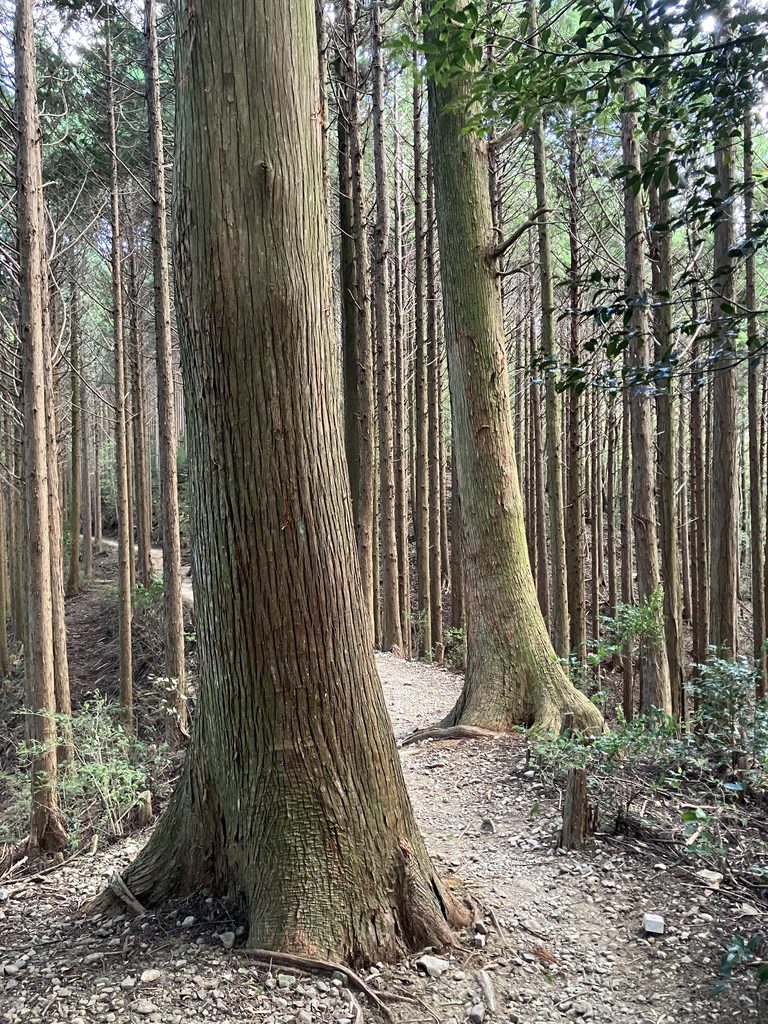
Even Forests That Look the Same Have Their Own Unique Character
And this time, I found a slightly different way to enjoy the forest.
It was about walking with a greater appreciation for the beauty of the forest itself.
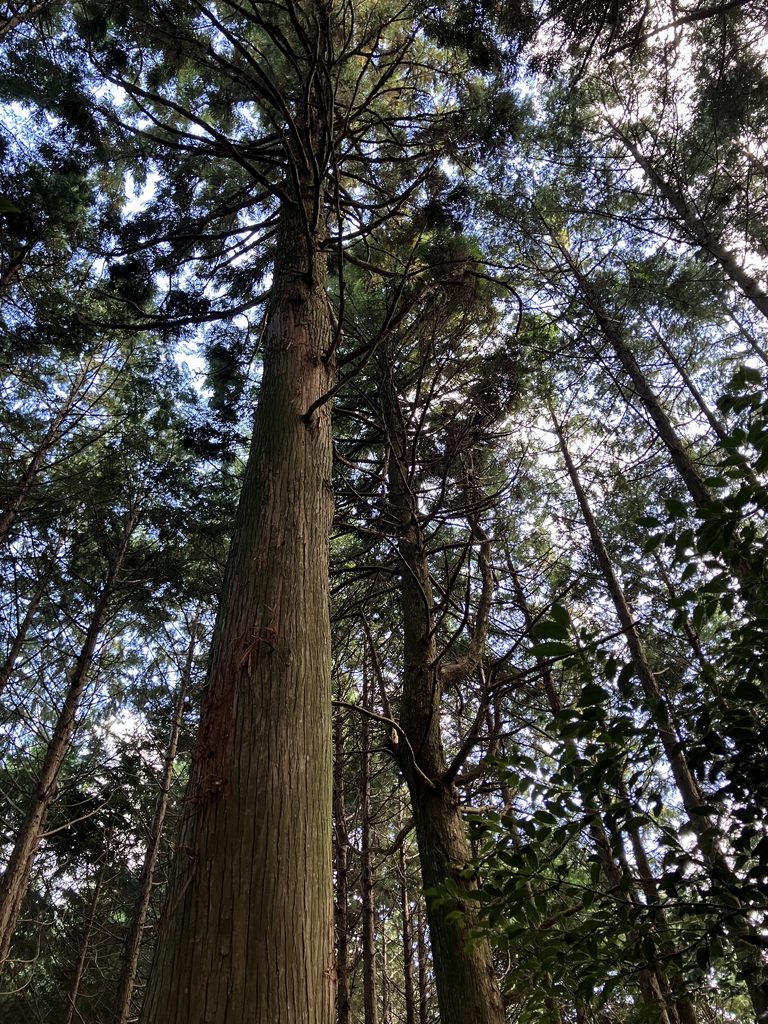
The trees standing side by side. The colors and patterns of their bark. The different shades of green in their leaves. The sunlight filtering through the trees and the shadows it creates.
Even forests that once looked the same to me have their own unique character from place to place.
The scenery also changes with the seasons, the weather, and the time of day.
Although I’ve walked this trail many times before, simply paying a little more attention allows me to discover beauty I had never noticed before.
The trail I once found monotonous had now become fascinating to me. Perhaps it wasn’t the forest scenery that had changed, but rather the way I saw and appreciated it.
“Maybe hiking is more fun than I thought...”
With these thoughts in mind, I continued walking through the forest.
Kumano Kodo Nakahechi Roadside Station | Take a Break with Local Specialty Mehari Sushi
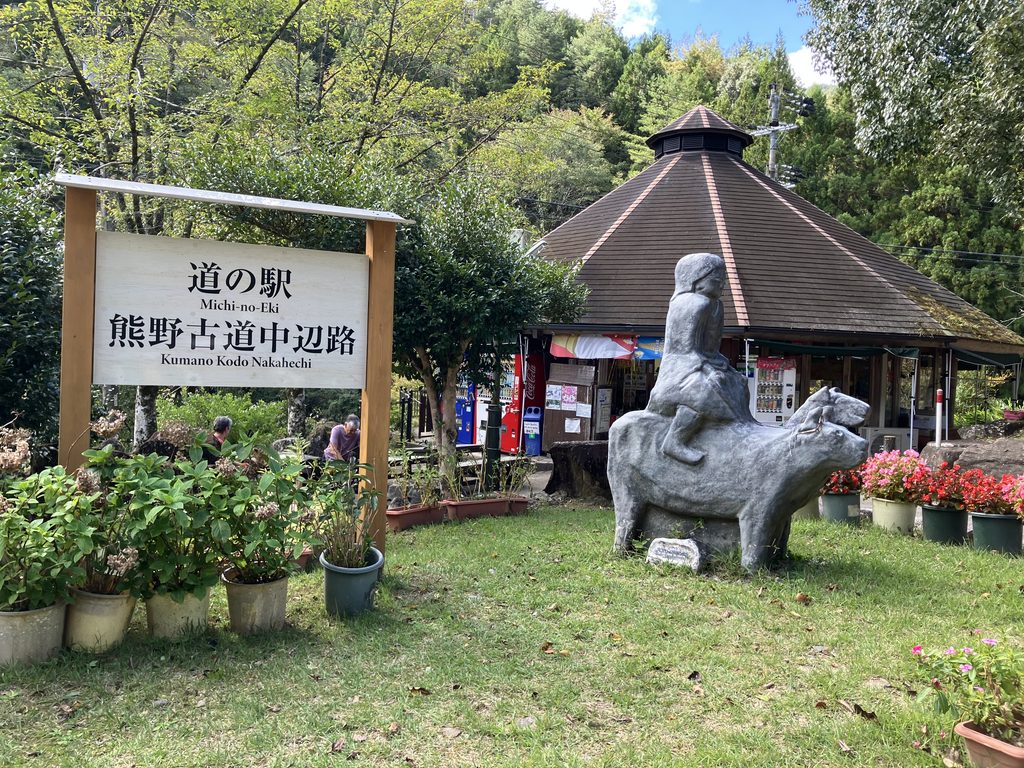
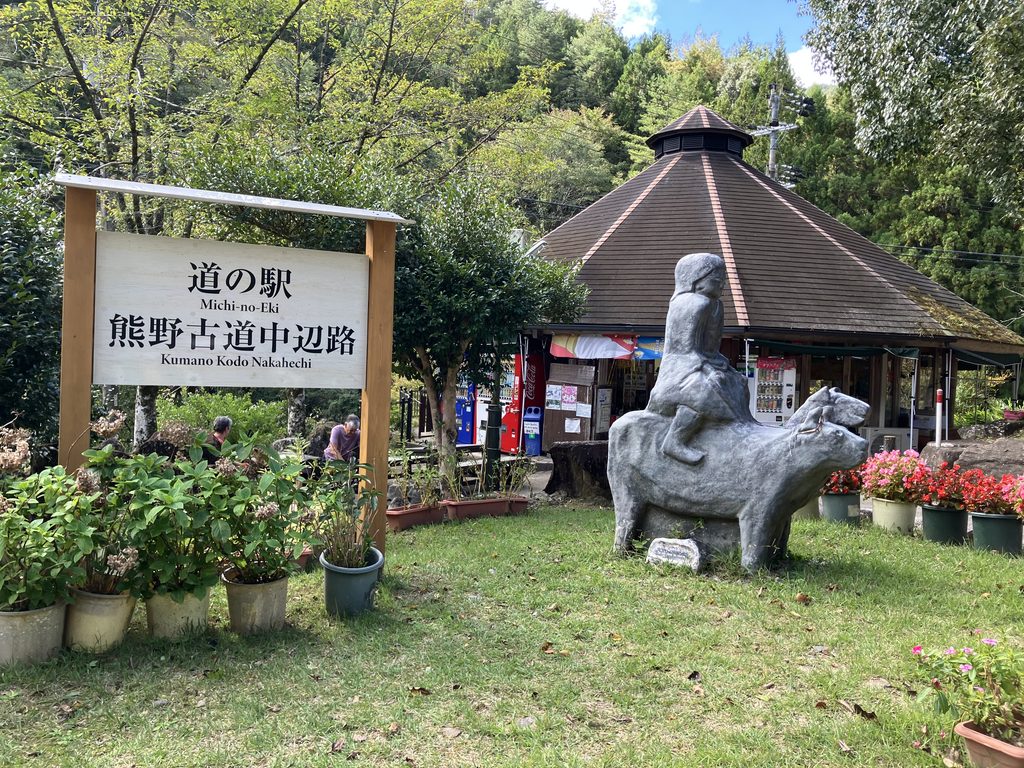
As the trail began to descend more frequently, I could sense that I was getting closer to Chikatsuyu, my destination. Before long, I could hear the sound of passing cars, and I arrived at Kumano Kodo Nakahechi Roadside Station, located along the main road.
I was starting to feel hungry, so I decided to stop here for lunch.
The roadside station has a shop and restrooms, making it a welcome rest stop for hikers. Since it’s also a popular stop for drivers, I couldn’t help feeling as though I had suddenly been brought back to everyday life after walking through the peaceful forest...
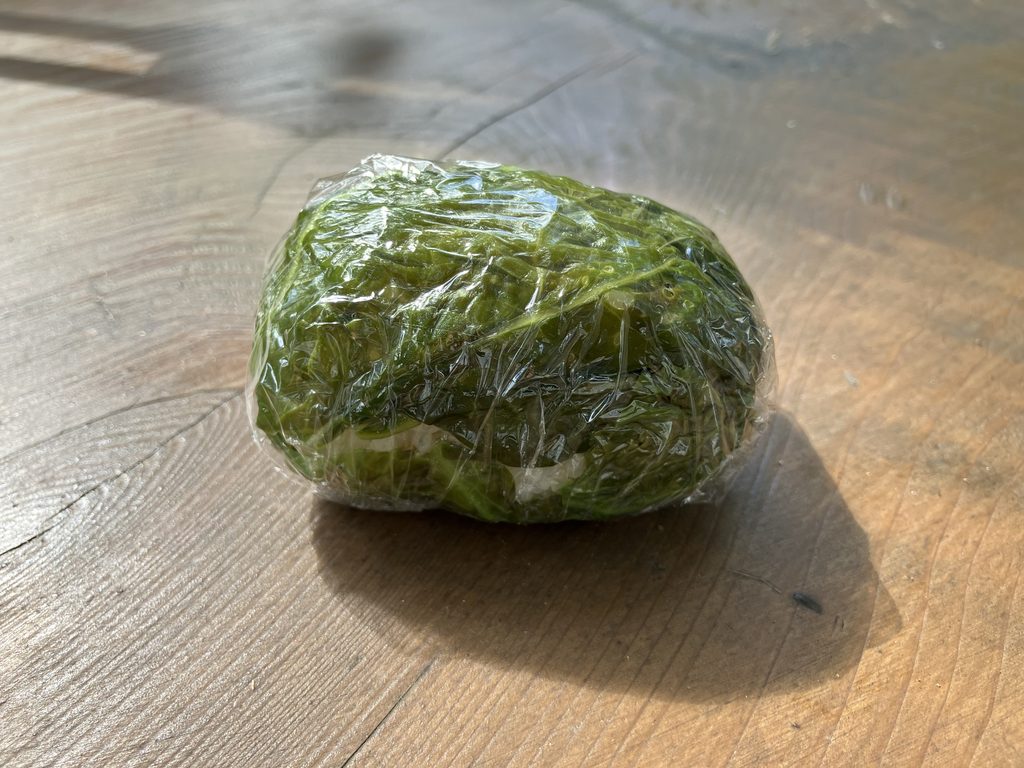
One local specialty I highly recommend trying here is “Mehari Sushi,” a traditional dish from the Kumano region.
Mehari Sushi is a simple dish made by wrapping rice in pickled mustard green leaves.
The pickled leaves have a pleasantly crisp texture, with just the right balance of saltiness and tanginess. Combined with the simple, comforting flavor of the rice, they create a surprisingly rich and satisfying taste.
After a long hike, when you're tired and hungry, it tastes even better.

From Gyuba-doji to Chikatsuyu | Peaceful Rural Scenery at the End of the Journey
Feeling satisfied after lunch, I set off again.
Chikatsuyu is almost within reach! After about a 10-minute walk from the roadside station, I arrived at Hashiori Pass.
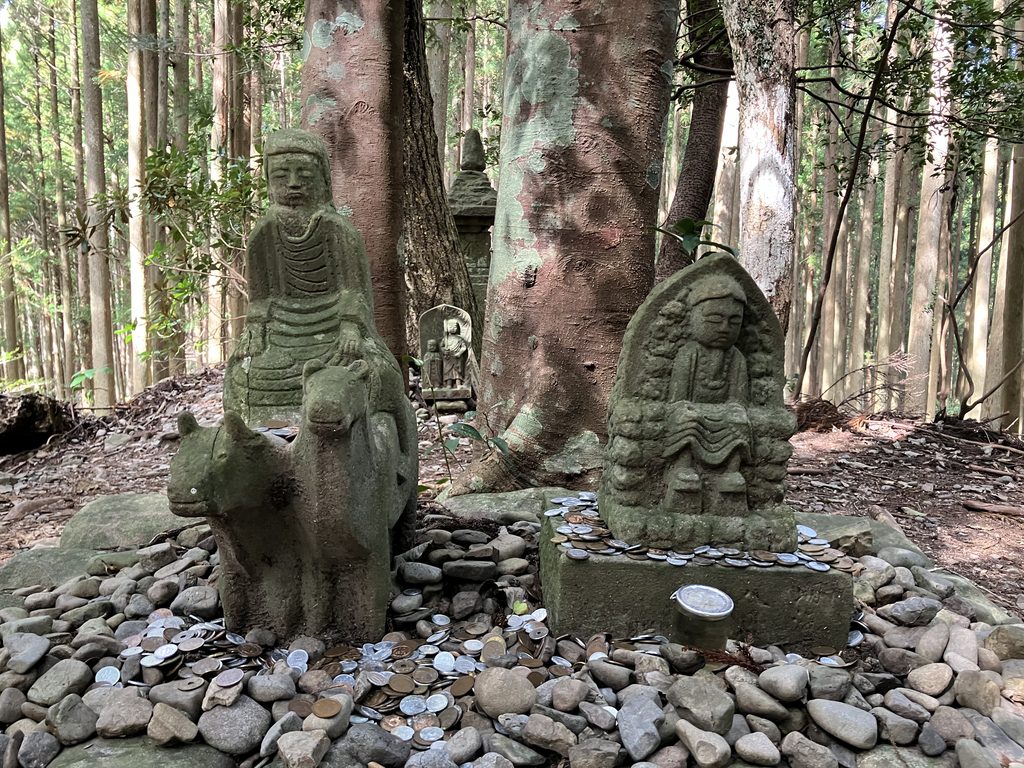
Here stands a stone statue of “Gyuba-doji,” known as one of the symbols of the Kumano Kodo.
It is a small stone statue, about 50 cm tall, depicting a figure riding both a cow and a horse. When you see it in person, you may be surprised by how small it is.
But there’s something truly charming about its cute and peaceful expression.
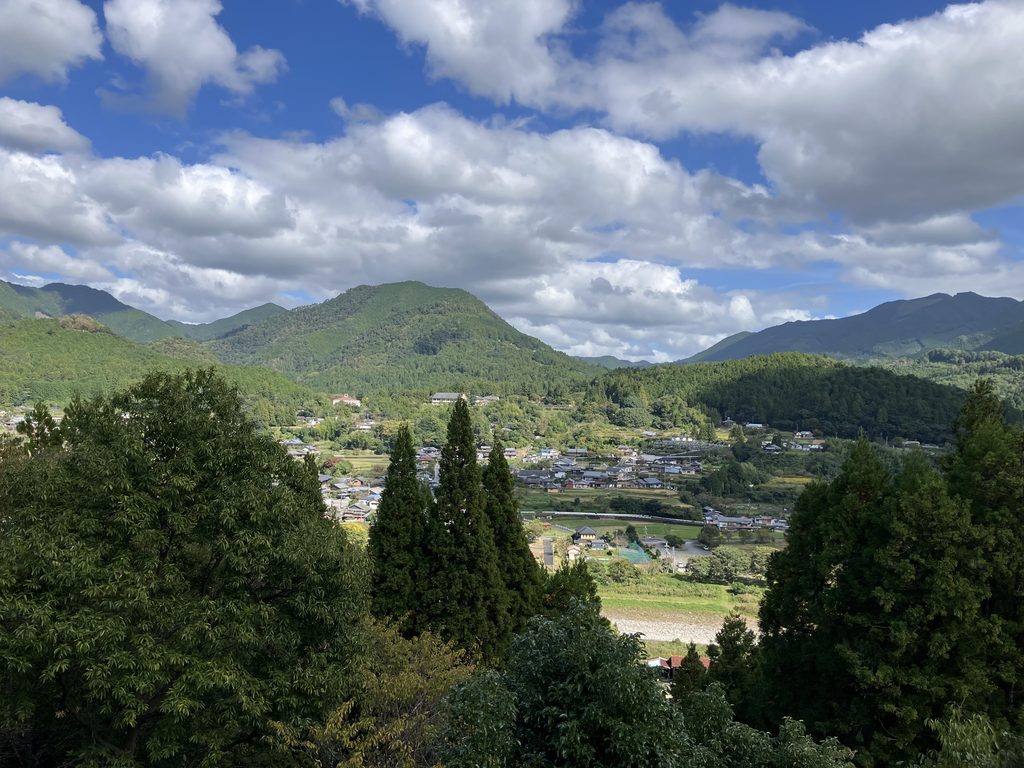
And as I crossed Hashiori Pass, the village of Chikatsuyu finally came into view below.
After walking through the forest for so long, the open scenery before me felt wonderfully refreshing. The village bathed in sunlight, surrounded by mountains, created a peaceful rural landscape that naturally lifted my spirits.
I imagine the pilgrims of long ago must have felt much the same way as they gazed upon this scenery.
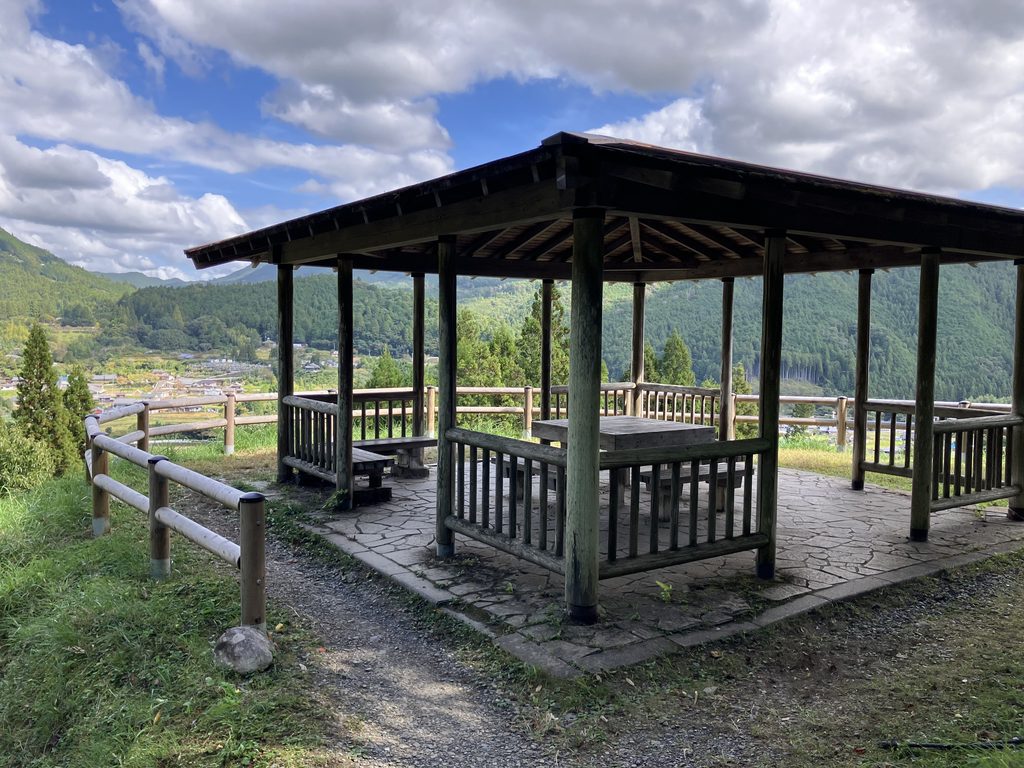
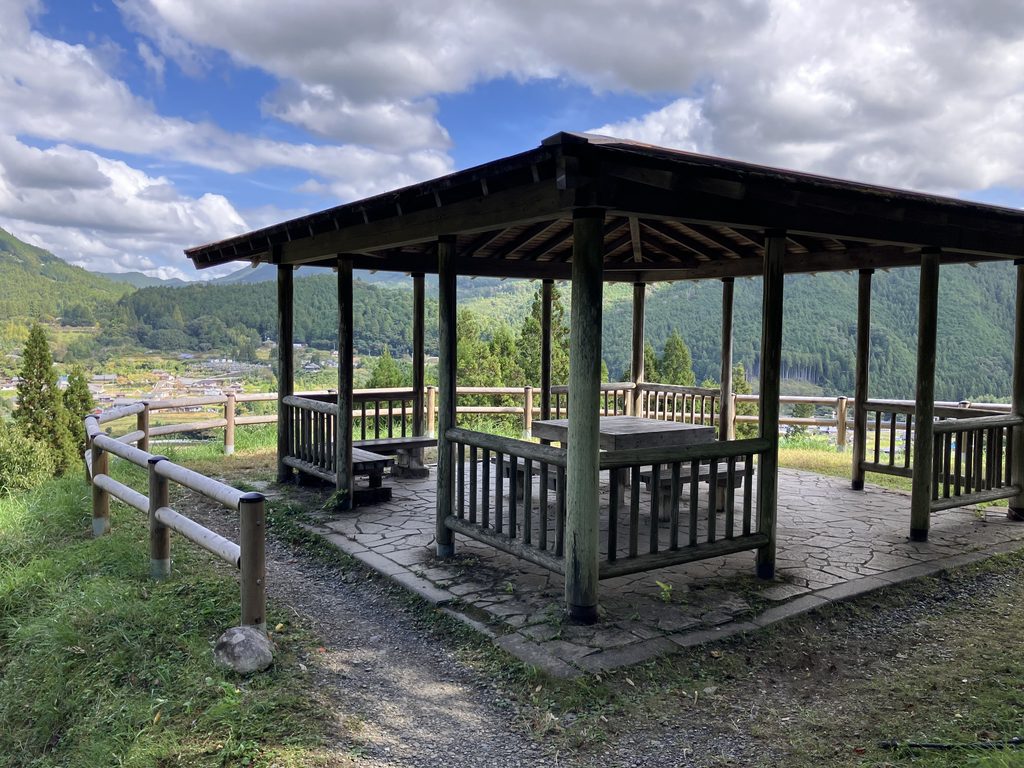
I took a short break at the gazebo at the viewpoint, realizing that today’s journey was coming to an end.
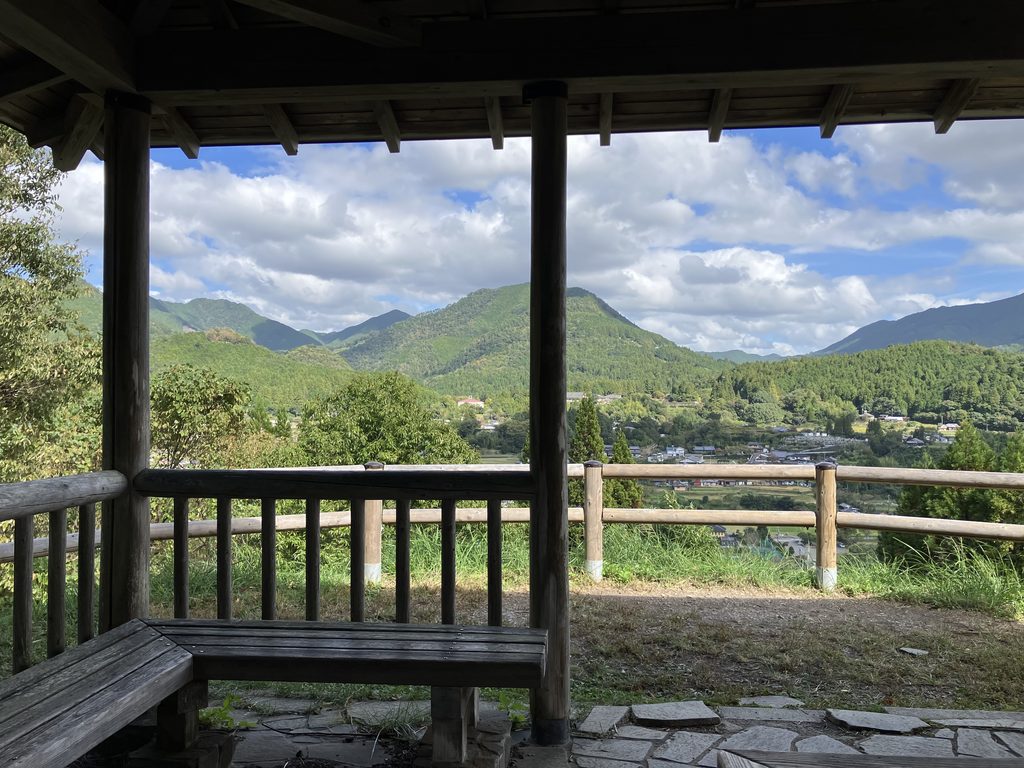
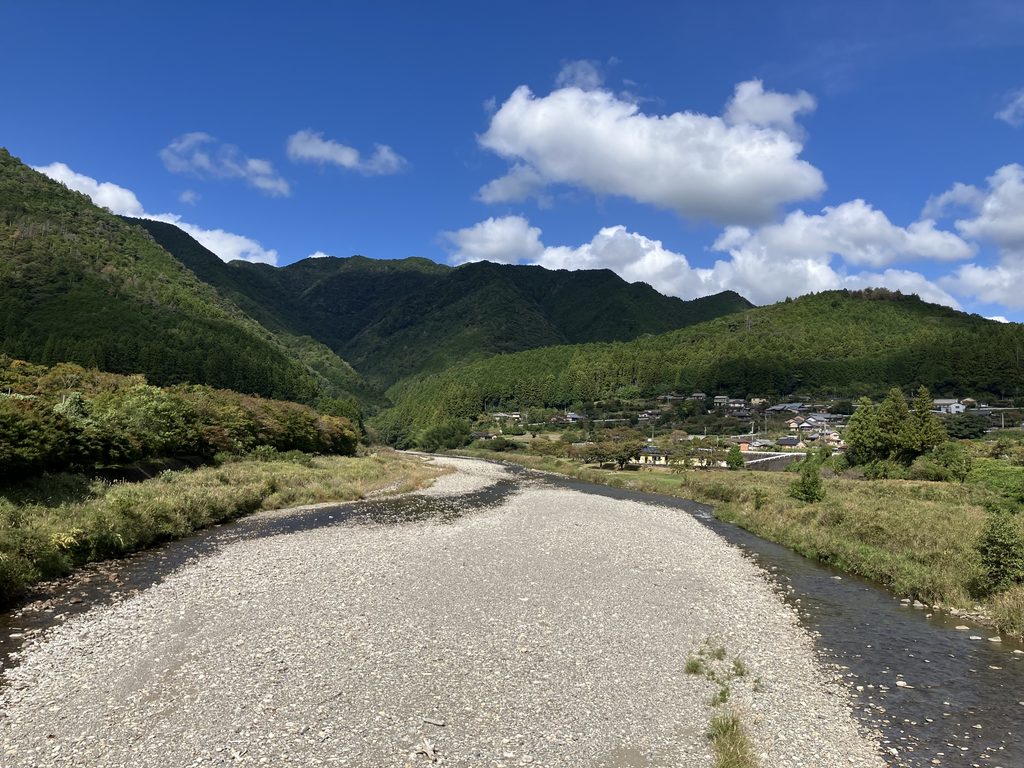
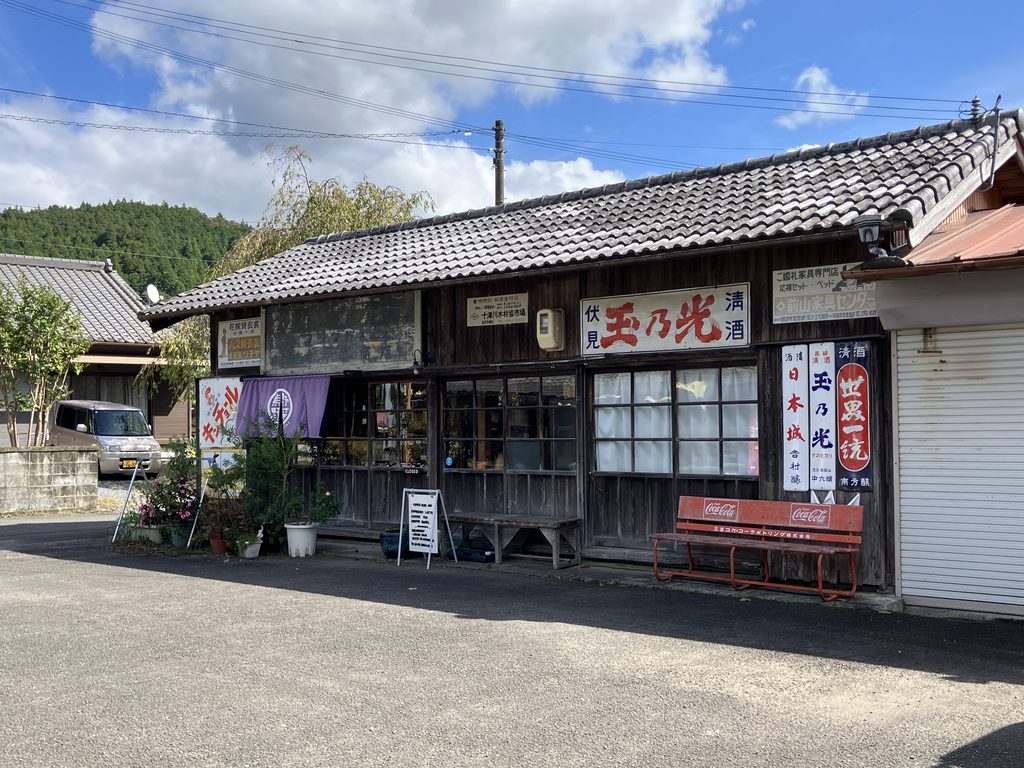
Chikatsuyu is a peaceful village surrounded by mountains. The Hiki River flows through the village, adding to its natural beauty, while traditional houses and rural landscapes remain much as they have for generations. There’s something nostalgic about the scenery, reminding me of Japan during the Showa era. Taking in these peaceful views of Chikatsuyu, I brought my hike to an end.
Trail Information: From Takijiri-oji to Chikatsuyu
Here’s a summary of the route I walked this time.
| Item | Details |
| Route | Takijiri-oji → Takahara → Chikatsuyu |
| Distance | Approximately 13.3 km |
| Estimated Walking Time | Approximately 5–7 hours |
| My Starting Time for This Hike | 7:30 AM |
| My Arrival Time for This Hike | 12:30 PM |
| My Total Hiking Time | Approximately 5 hours (including breaks and lunch) |
| Difficulty | Moderate (with a steep climb at the beginning) |
Note: Walking times may vary depending on your fitness level, weather conditions, and the length of your breaks. If this is your first time hiking the route, we recommend allowing plenty of extra time.
Recommended Spots for Lunch and Breaks
The route from Takijiri-oji to Chikatsuyu includes long stretches through the forest, with only a few places where you can sit down and enjoy a leisurely lunch. It’s a good idea to plan your rest stops in advance, depending on what time you start your hike.
If You Start from Takijiri Early in the Morning
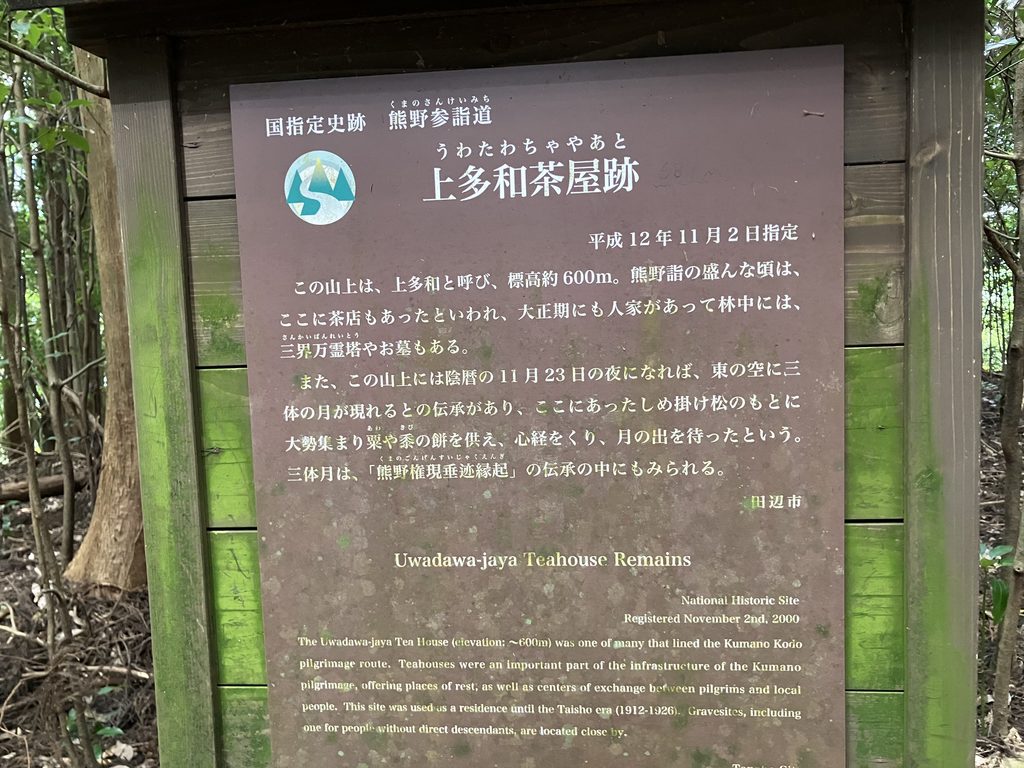
① Kamitawa Chaya Ruins (approximately 9.2 km from Takijiri)
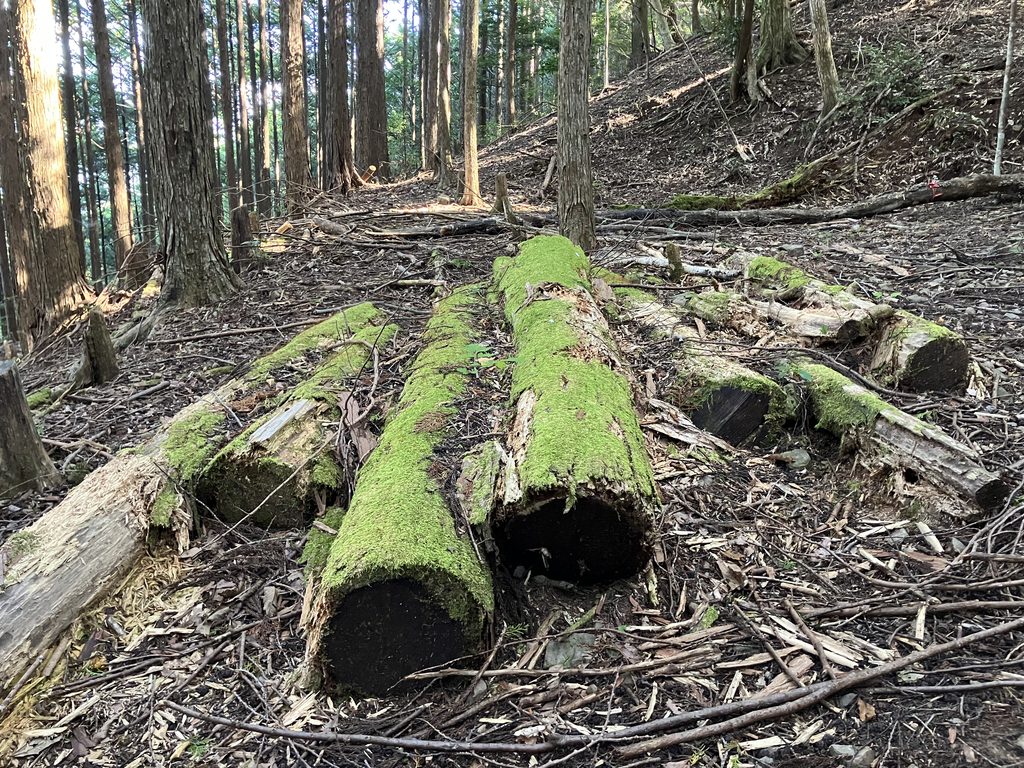
This is the site of a former teahouse. There are a few logs that can be used as benches.
② Osakamoto-oji (approximately 11 km from Takijiri)
A small stream flows nearby, and there are several logs where you can sit and rest.
It’s a peaceful spot to take a break in the forest.
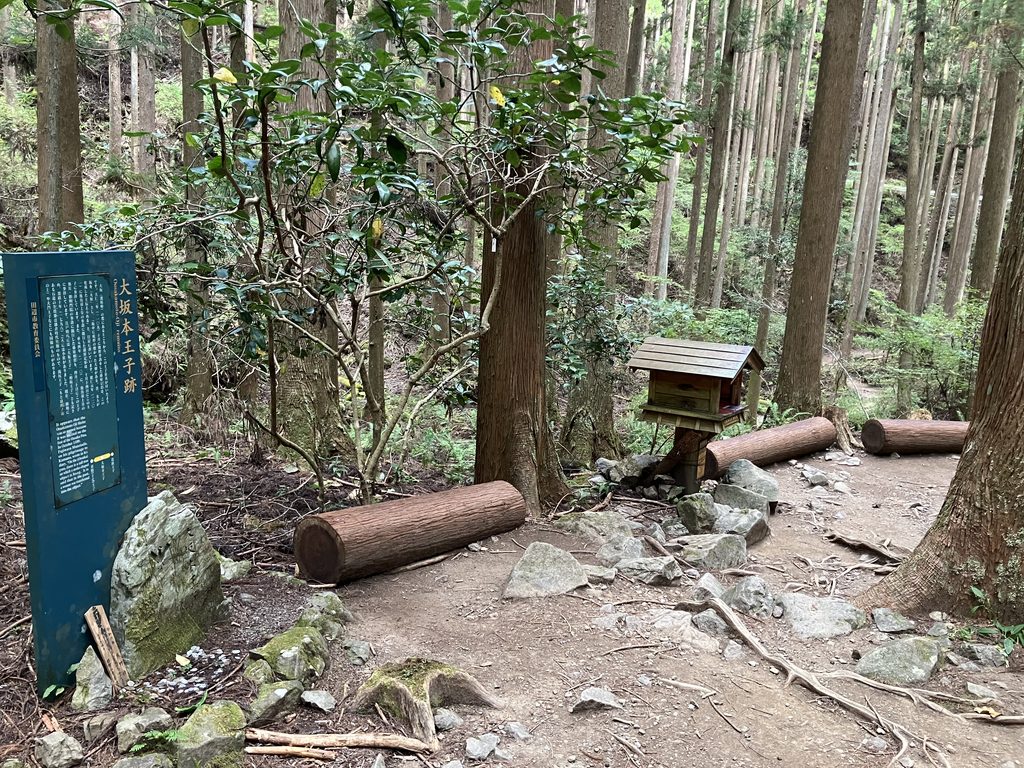
③ Kumano Kodo Nakahechi Roadside Station (approximately 11.8 km from Takijiri)
Located along the main road, this roadside station has a shop and restrooms.
You may also be able to buy local specialties such as mehari sushi (rice balls wrapped in pickled mustard leaves).
④ Viewpoint on the Descent from Hashiori Pass to Chikatsuyu (approximately 12.8 km from Takijiri)
There is a covered rest shelter where you can take a break while enjoying views of Chikatsuyu village.
ゴールまであと少しです。
If You Start from Takijiri Around 10–11 AM
⑤ Takahara Kiri-no-Sato Rest Area (approximately 4 km from Takijiri)
This is a fantastic spot offering panoramic views of the Kumano mountains.
It's a great place to enjoy lunch while taking in the beautiful scenery.
Note: Distances are approximate. Shop opening hours and the availability of food and drinks may vary from day to day, so we recommend bringing your own lunch, snacks, and drinks.
Also, if you start around 10–11 AM, you may have limited daylight hours depending on the season. Especially in autumn and winter, be sure to check the sunset time and allow plenty of time to complete your hike before dark.
Final Thoughts | Discover Something New Every Time You Walk the Kumano Kodo
Walking the approximately 13.3 km from Takijiri to Chikatsuyu this time reminded me once again of the beauty and charm of the Kumano Kodo.
The joy of walking while reflecting on the history and legends of the Kumano Kodo. The breathtaking views of the majestic mountains. And the peaceful moments spent in the quiet forest.
Although I have walked this trail many times, I discover something new each time.
Perhaps the true charm of the Kumano Kodo lies not only in its spectacular scenery and historic sites. Simply walking through the forest and immersing yourself in nature—there is something special about these quiet, simple moments that makes the Kumano Kodo so unique.
I hope that everyone planning to walk the Kumano Kodo will discover their own unique way of enjoying this special trail.
Related Articles
Make the Most of This Route
・ Kumano Kodo Nakahechi Route: Beginner’s Guide to 2-, 3-, and 4-Day Itineraries, Akagigoe & the Kumano River Boat Tour
Recommended Model Courses for the Kumano Kodo Nakahechi Route
・ Why Staying in Chikatsuyu Is the Best Choice When Walking the Kumano Kodo Nakahechi Route
For First-Time Kumano Kodo Hikers: “Why Do So Many People Choose to Stay in Chikatsuyu?”
This article explains the key points to consider when choosing where to stay along the route.
Where to Stay on the Kumano Kodo Nakahechi Route
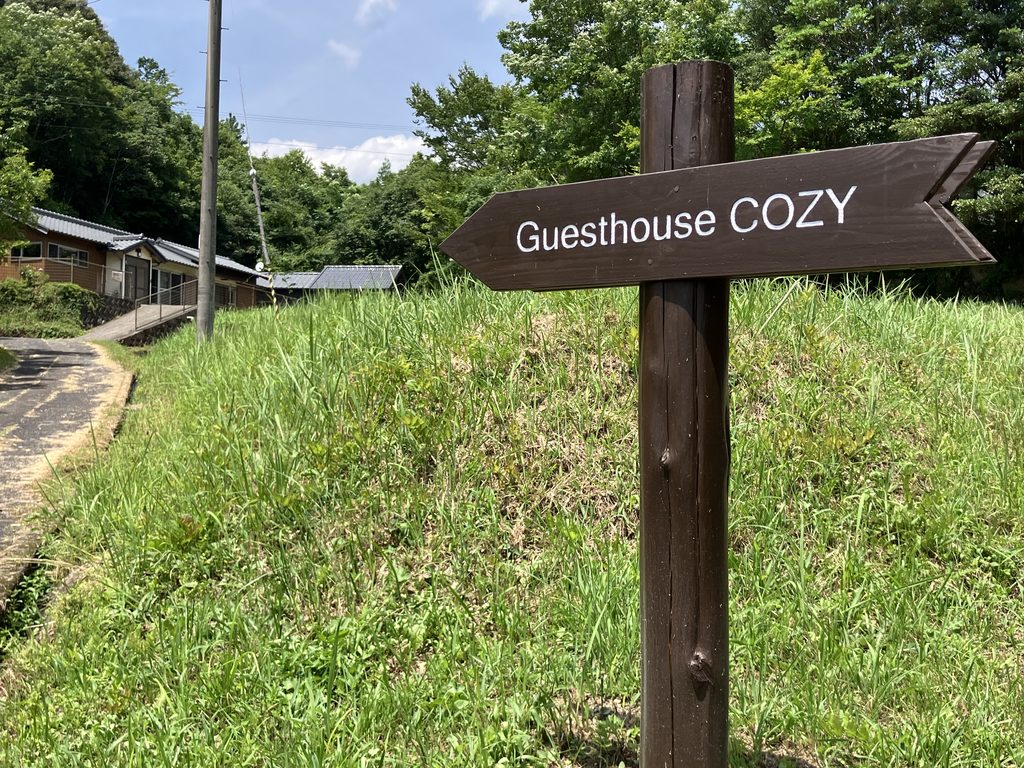
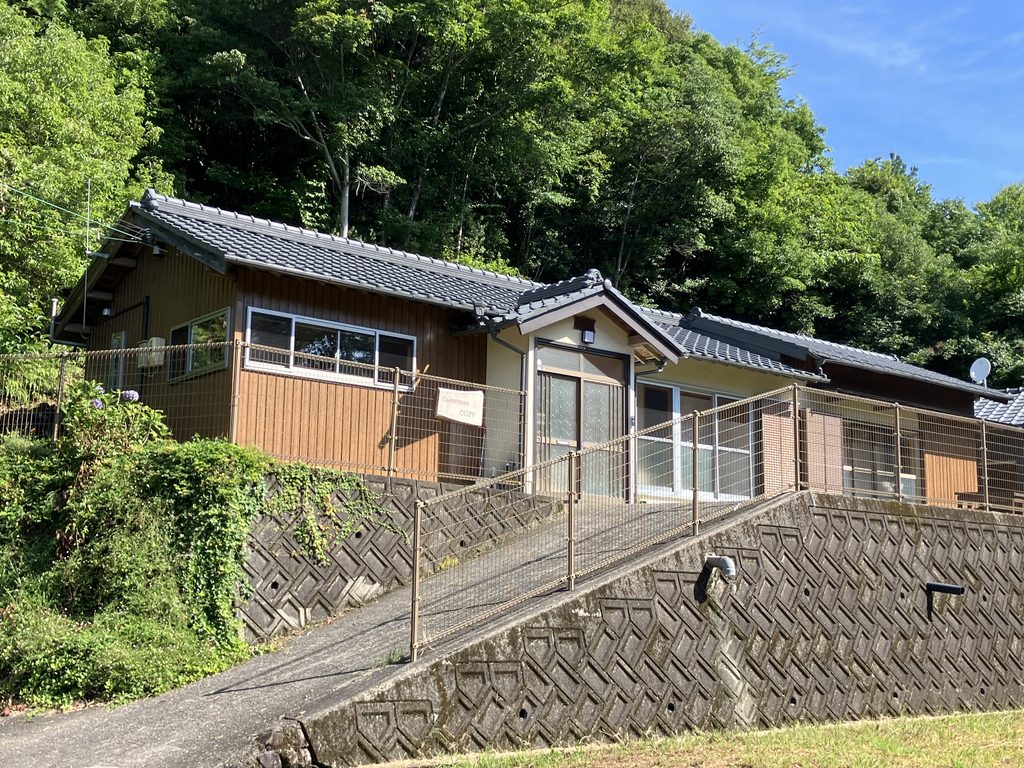
🏡 Guesthouse COZY(Chikatsuyu)
About 13 km (8 miles) from Takijiri-oji.
Located about halfway to Kumano Hongu Taisha, it is an ideal place to rest before the longer hike on the following day.
With only three guest rooms, Guesthouse COZY offers an intimate atmosphere where sharing dinner with hikers from around the world becomes one of the most memorable parts of your journey.
A Small Guesthouse with Only Three Rooms
Meet Fellow Hikers
Homemade Dinner, Breakfast & Packed Lunch
Solo Travelers Welcome